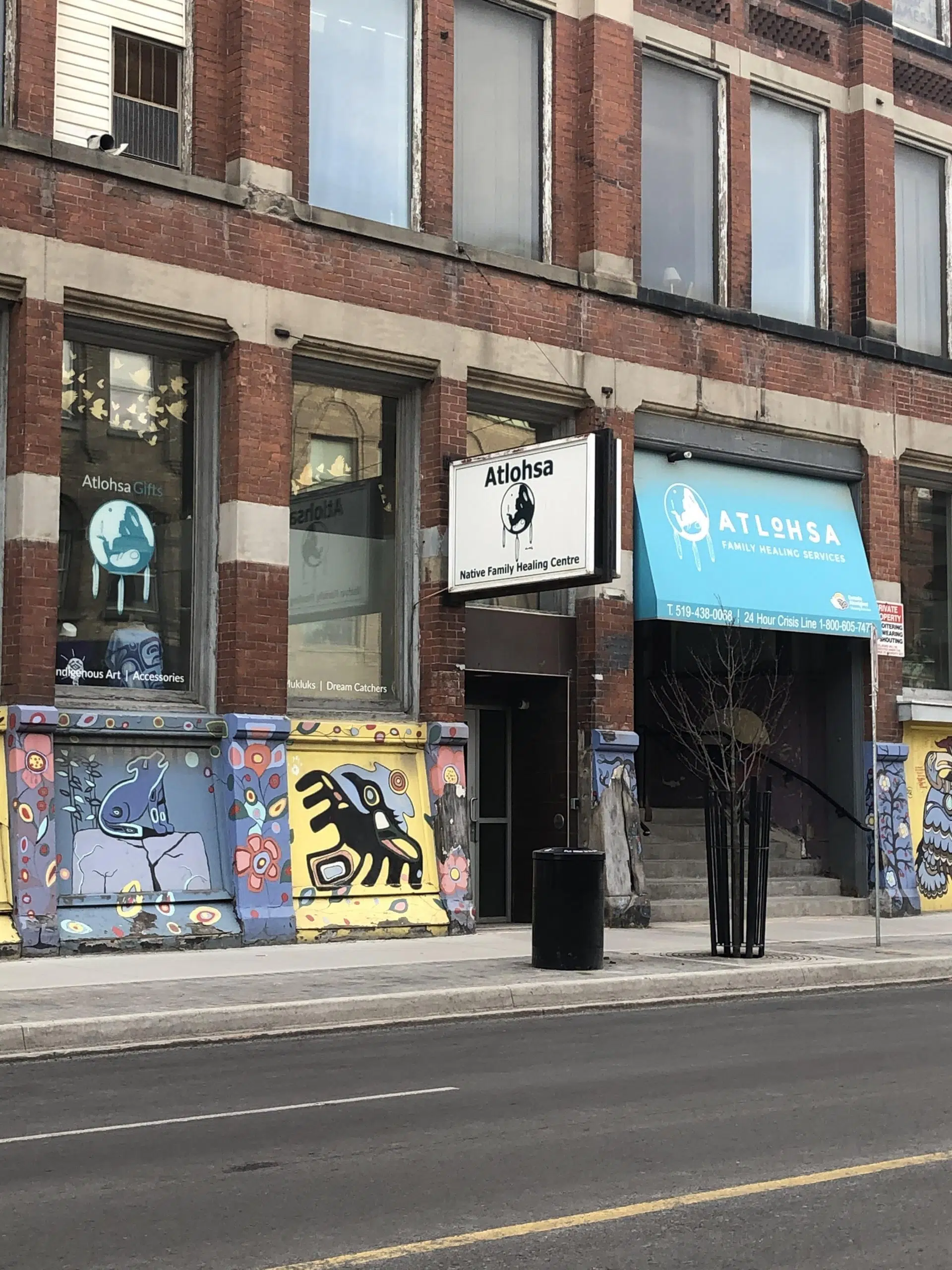
Atlohsa Family Healing Services. Photo taken by Victoria Newman/ XFM News.
In Canada, Indigenous women make up four percent of the female population but account for over fifty percent of those trafficked.
Elyssa Rose, Anti-Human Trafficking Coordinator at Atlohsa Family Healing Services, highlighted this issue and how Okaadenige is in response to this. At Atlohsa, the heart of their anti-human trafficking programming is a survivor’s circle.
“Okaadenige centers around our survivor’s circle. A private and safe way that (our participants) are able to come together and connect and relate with one another. But also grow and empower one another.”
Okaadenige, an Ojibwe word, means he or she braids things. Which represents Atlohsa’s three-strand approach to combatting human trafficking. The three-strands include prevention, awareness, and support services.
Rose said that the survivors circle is the heart of their program for these women and girls. And from that circle, they work with these women and girls to determine what they feel their needs are so that they can move forward.
In addition to the circle, they provide one-on-one support, cultural care, referrals and resources, and an annual healing and wellness retreat for survivors. They provide support for survivors, current victims, and those at risk of being trafficked.
Human trafficking is an issue that continues to grow around the world. But as Rose highlighted, the majority of women and girls being trafficked in Canada are young Indigenous women. Rose said that this year, the average age now for girls to be recruited is 13.
“Indigenous people have been facing poverty for so long. Poverty keeps our people stuck. And what does poverty breed? It breeds addiction, mental health and abuse such as domestic violence, neglect, and human trafficking. And so, we cannot address human trafficking without understanding why, and addressing poverty. Especially how it’s impacting Indigenous people and the issue of human trafficking,” she said.
When it comes to moving forward from what these women and girls have experienced, it is all about providing them with support and letting them control their journey.
“I would say that the women and girls who are in our program are definitely on their journey and we are walking beside them. You know, we’ve heard time and time again that survivors say the issue’s already here. What we need is someone to support, someone to walk alongside us, someone to help us navigate specific things in our life that lead to a good life.”
And that they believe in choice, freedom of speech, and allowing these women and girls to make their own decisions “because that is something they weren’t always able to do.” She further said that for the most part, it is the women and girls doing the work for themselves and meeting them halfway.




Comments