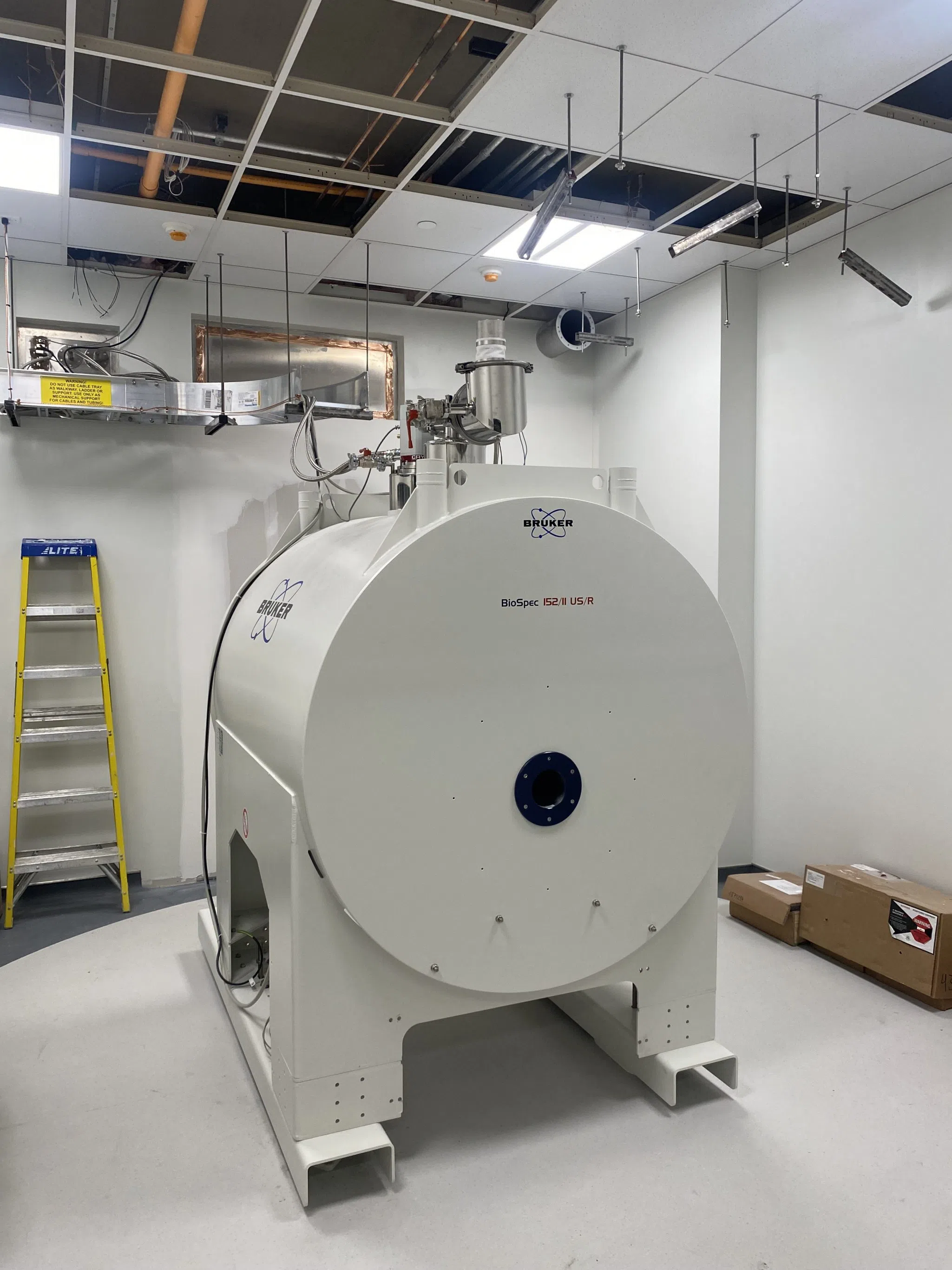
Western University is now home to a new ultra-high field 15.2T MRI scanner, just the second of its kind in North America and only sixth in the entire world.
The magnetic image scanner was delivered on Thursday, November 16th, and is being held at Western’s Robarts Research Institute.
Ravi Menon a professor in biophysics and medical imaging at Western says in comparison to their 9.4T scanner “it’s much more powerful. So the main field is about 300,000 times the Earth’s magnetic field.
And maybe the field is kind of the currency in MRI. So the higher the magnetic field the more signal you get.
So that allows you to go to higher spatial resolution or be able to image faster or some combination of those. Typically we’re doing both we’re Imaging faster, and we’re Imaging at a higher spatial resolution.”
Menon mentions that we don’t really see changes in degenerative disease. The 15.2T scanner will now be used for mouse brain imaging, CFMM uses the 9.4T for imaging in mostly rats and mice currently but the transfer to the new scanner will give the 9.4T more time to process.
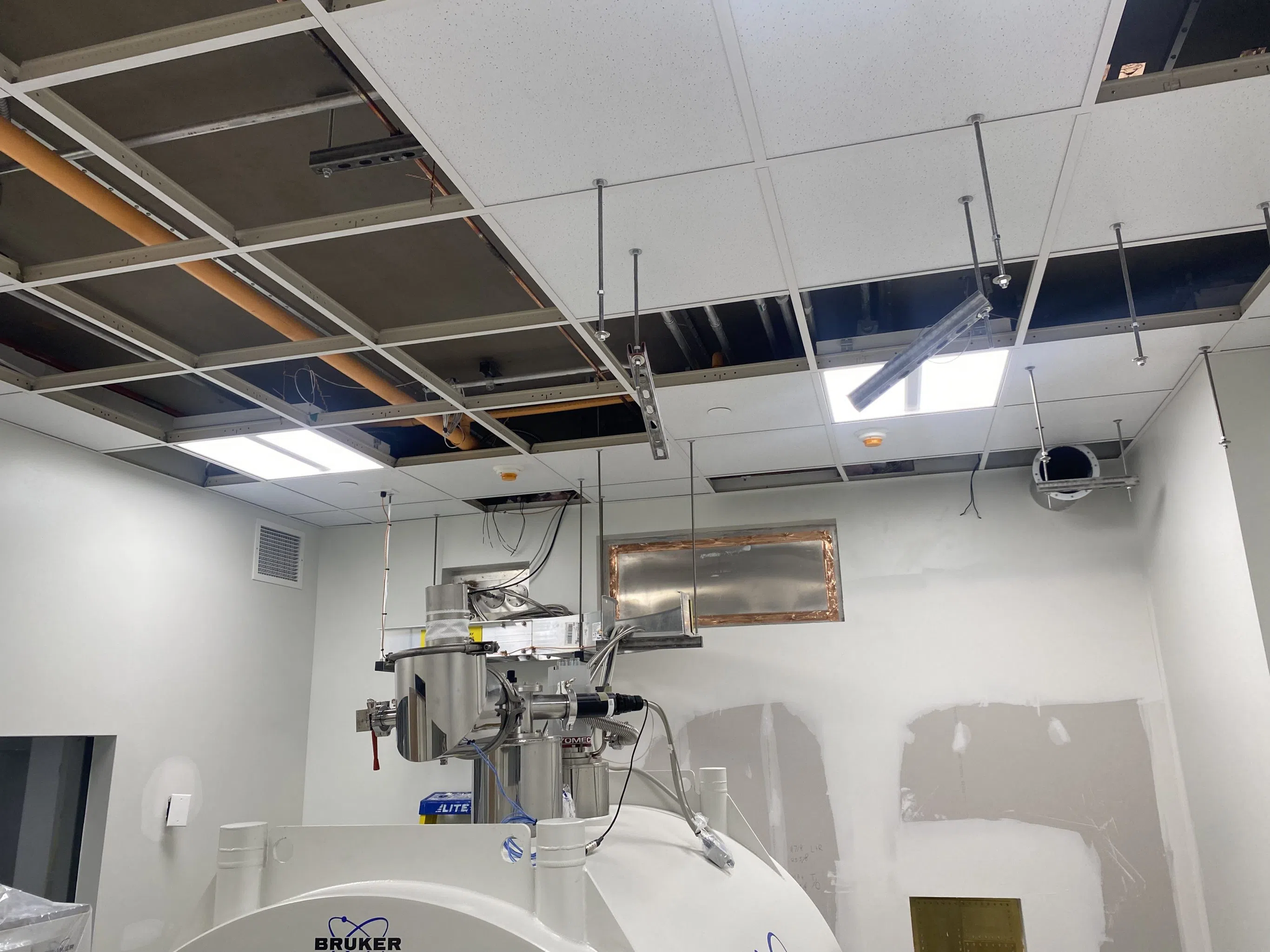 “It’s going to allow us the image these Mouse models of disease with the kinds of spatial resolution that we’ve never had access to, as you know everything in the mouse brain is smaller.
When we use more conventional fields, we actually can’t see it many of these things kind of get clumped together” Menon says
The scientist and professor went on to say that it’s important to be able to separate different areas of the hippocampus which is involved in memory as it’s got a number of parcellations. It’s also very hard to see it at lower magnetic fields. But with this kind of feeling of strength, this is something he thinks we can see very clearly.
Canada however was “late to the game, as it was the latest one to get this particular scanner, but Menon says that there is only one 15.2T made per year.
“The first of these was installed I believe five or six years ago. But these I mean they basically sell one a year is what it boils down to. So this is by far it’s about 30% higher than any other scanner in Canada given the costs. It’s likely to remain that way for quite a long time, I was going to change the ability to look non-invasively in the animal models.”
According to Menon the cost of this scanner was $5 million as Western paid a large amount of money to help with this purchase through its funding. The scientist and professor says that we they use it in humans and the same holds for animals so they can follow an animal over the course of their lifespan.




Comments