In a Canadian first, Dr. George Athwal at St. Joseph’s Health Care London has introduced the revolutionary next step in mixed reality technology that can track surgical instruments in real-time and precisely point the way for surgeons. St. Joseph’s is one of two centres in the world to debut the technology.
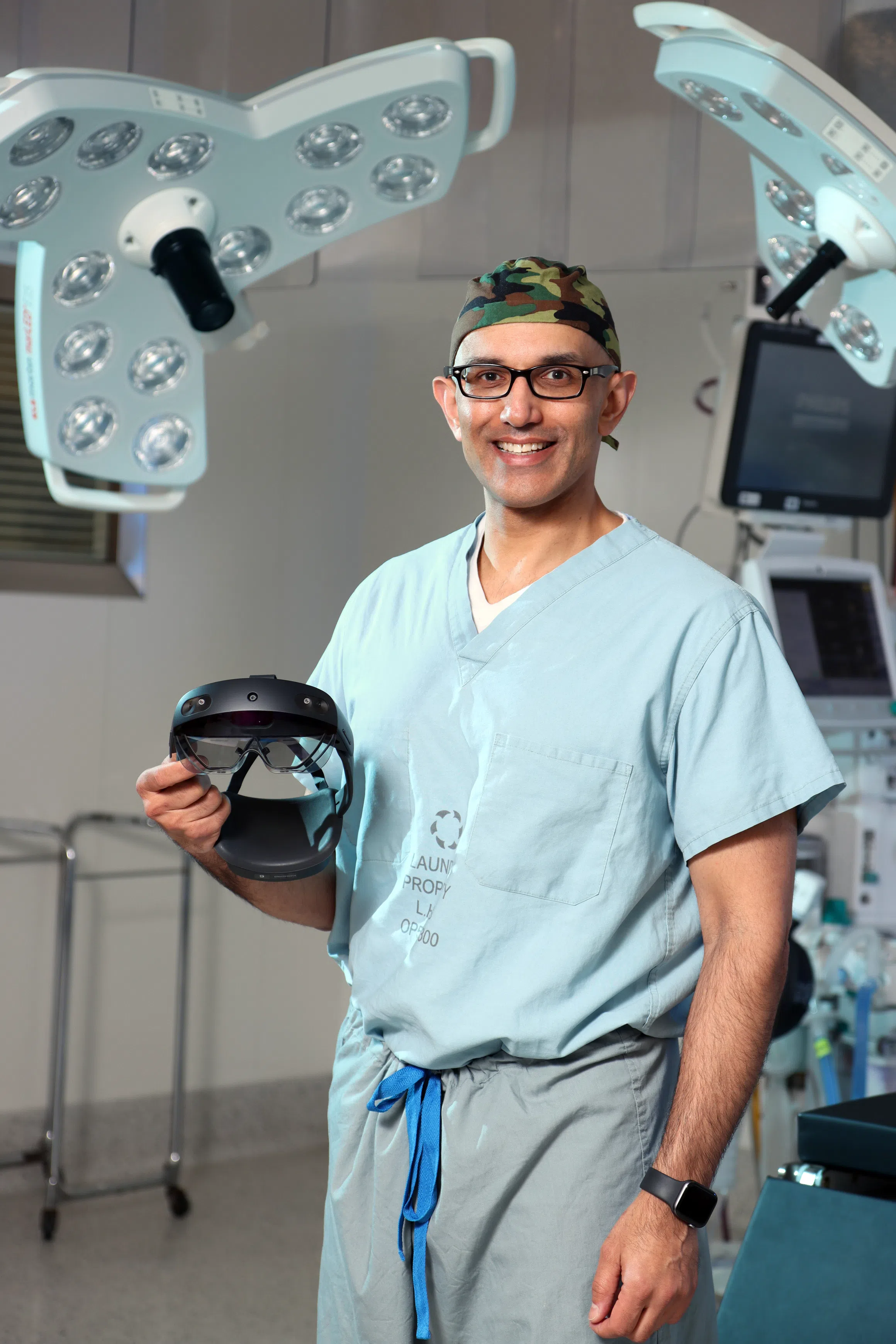
Dr. George Athwal at St. Joseph’s Health Care London has introduced the revolutionary next step in mixed reality technology that can track surgical instruments in real time and precisely point the way for surgeons. St. Joseph’s is one of two centres in the world to debut the technology. (CC: St Joseph’s Health Care)
“Put simply, the system allows me to peer into and through the incision to the bones and other anatomical structures below. It knows exactly where my instruments are and can guide me where to make the most intricate adjustments to replicate the pre-surgical plan precisely,” explains Dr. Athwal.
With this evolution of technology, a 3D representation of the patient’s anatomy and shoulder implant is overlaid on the surgical site, giving the surgeon the sci-fi superpower of X-ray vision while operating. Points of light provide vital markers for the surgeon to target.
Dr. Athwal was also a part of the team that worked to develop this mixed reality shoulder replacement technique. He has performed numerous surgeries using the initial version of the technology and is excited about the next step.
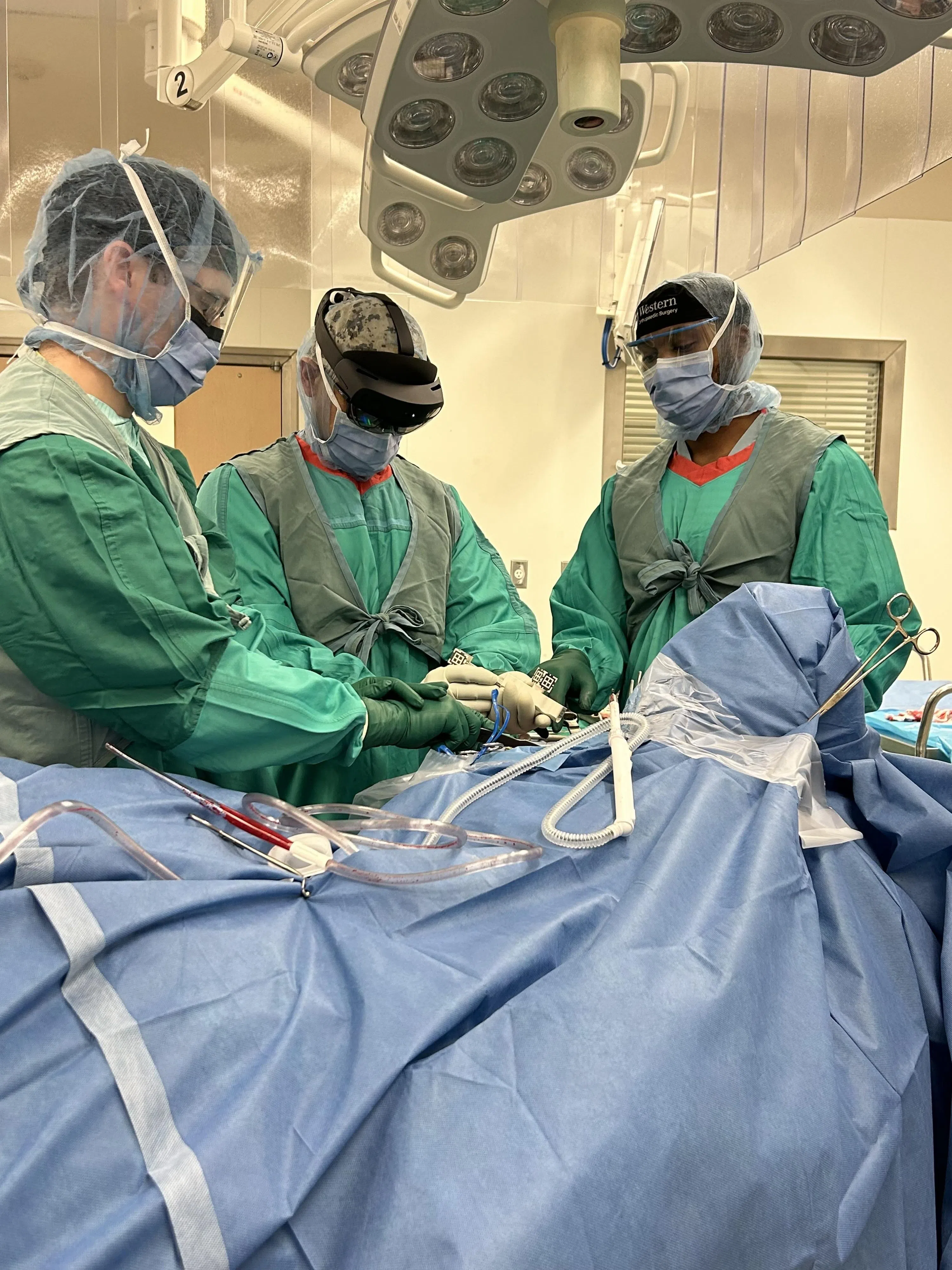
In the operating room: Dr. George Athwal at St. Joseph’s Health Care London prepares to perform the ground-breaking next step in mixed reality technology that enables 3D imaging, similar to holograms. (cc: ST Joseph’s Health Care)
“It’s something that we’ve been developing for quite some time now, so it was wonderful to see it in action on patients. When we first developed it, we started with using it on models and then cadavers and now finally after being able to use it on a patient and really be able to put the implant in the best possible way, it was very satisfying.”
Dr. Athwal explains “It’s going to help the patients as we will now be able to put these implants in very accurate and precise location. It’s also going to help surgeons like myself in being able to replicate those plans and goals we make before surgery. This technology allows me to do that with a high degree of predictability.”
Dr. Athwal believes shoulder implants are just one of the many possible implementations of this technology and expects that with more work, this tech can be implemented into hip replacements and spine surgeries too.




Comments