About 30 members of the self-described white nationalist group Second Sons gathered Nov. 23 on the Wortley Road overpass in London, Ont., where they displayed a black-and-white banner reading “REMIGRATION NOW,” along with flags including the historic Red Ensign, a symbol long adopted by far-right groups
The demonstration, carried out in full view of passing traffic and pedestrians, lasted roughly 30 minutes before the group walked off in formation toward a nearby park.
For many residents, the banner and the group’s presence felt like intimidation. But for Urban League President Luis Patricio, the incident revealed deeper concerns about community.
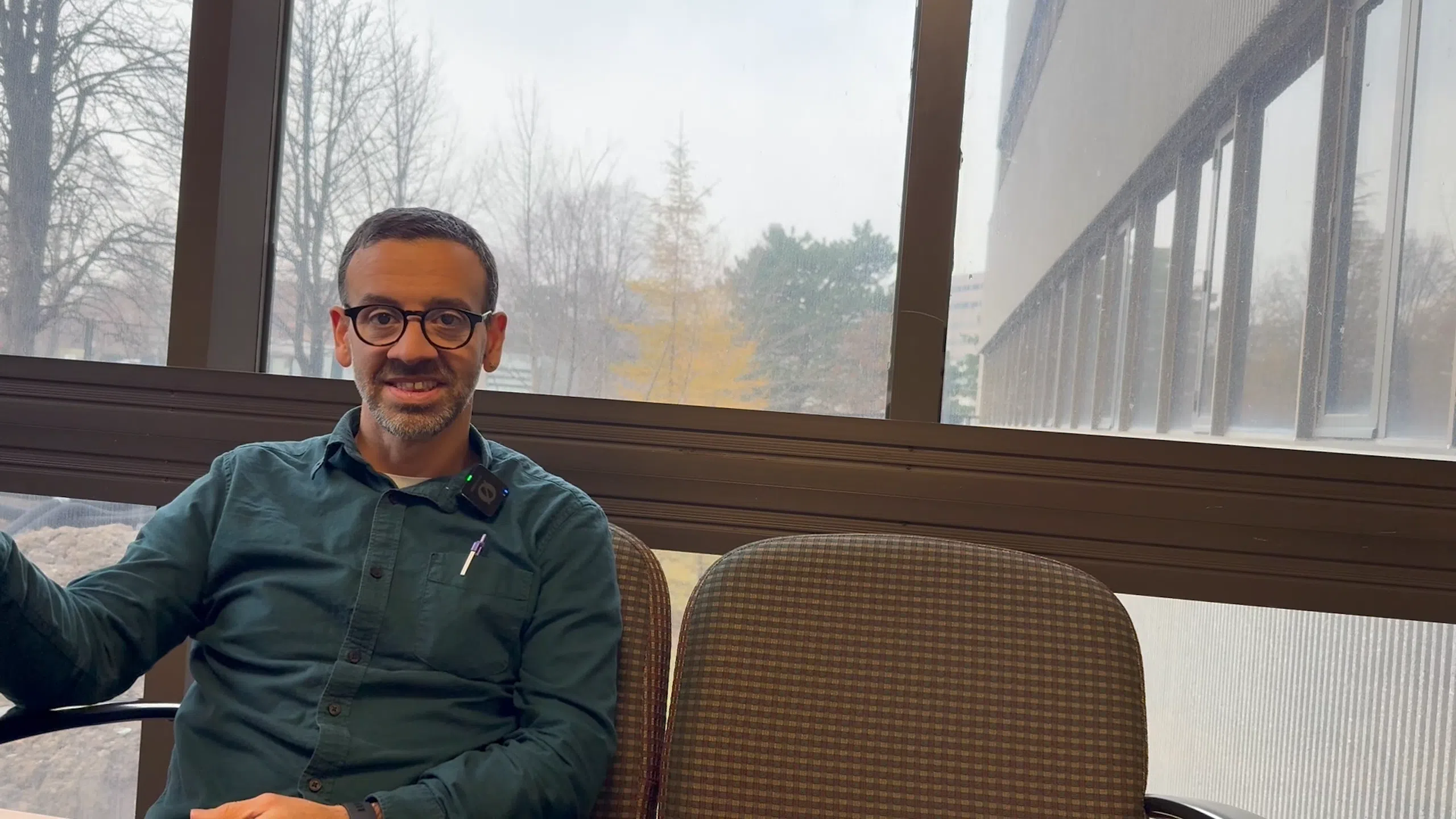
“When I first saw it, the first feeling for me is like sadness,” Patricio said in an interview
“A lot of people who join those groups are looking for belonging and safety. But the way we’re addressing the struggles we’re having is through initiatives like this one.”
Patricio, who immigrated to Canada from Brazil in 2016, said he has not experienced overt racism since arriving, but acknowledged that subtle discrimination can be harder to detect. “I haven’t experienced anything explicit, no. It’s very subtle. It’s very hard to pinpoint.”
The fact that the protest took place on a bridge a piece of public infrastructure is not accidental, he said. “Using public infrastructure to actually tell that messag, it can associate that image with the neighbourhood,” he warned. “That public space is supposed to be welcoming.”
Patricio draws on his volunteer work with the Urban League, a volunteer-run umbrella organization supporting community groups across London, to argue that strong public life is essential to counter exclusion and division.
“When people don’t have an opportunity to be together to share space, to work together, to attend events, that public life is so fundamental it can prevent events like this from happening,” he said. According to Patricio, the Urban League helps community organizations connect and build local initiatives. But he warned those efforts are increasingly challenged by declining support and funding.
He said municipal politics play a critical role in determining what resources neighbourhoods have access to. “Municipal politics can really influence how we experience our neighbourhoods and what resources are available,” he noted.
For Patricio, an inclusive city is one where residents feel they belong without one group’s fear or anger undermining another’s rights. “People don’t realize how much we have in common,” he said. “Inclusion is to address all those human needs in a way that doesn’t impact negatively other people.”
He added that freedom of expression can’t come at the expense of others’ safety or dignity. “Someone’s freedom ends if they’re hurting someone else,” he said.
Patricio said incidents like the bridge banner are a stark reminder of what happens when public spaces are co-opted for intimidation, rather than connection and why rebuilding public life must be a priority for communities that want to resist hate.



