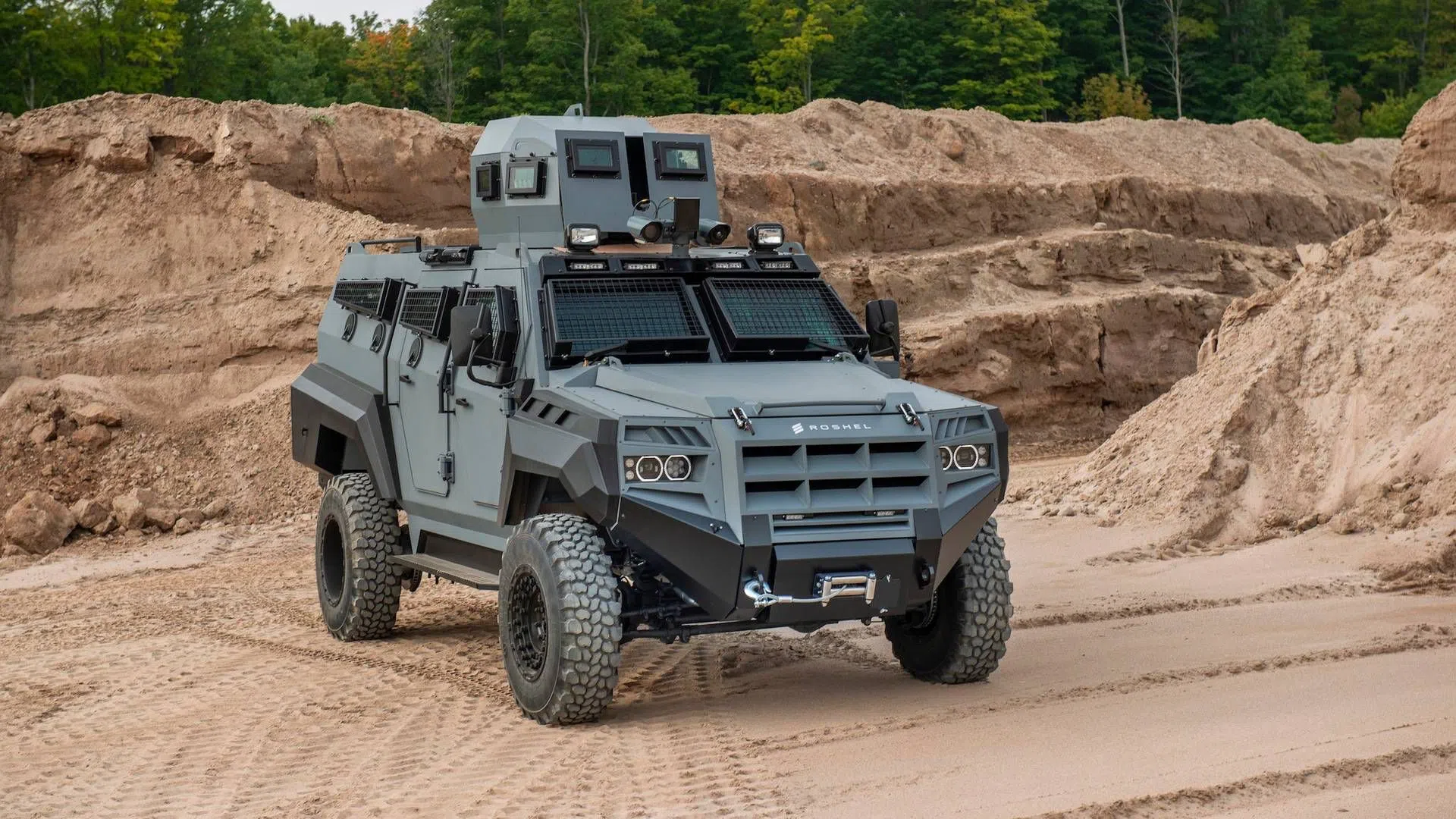
America’s Immigration and Customs Enforcement (ICE) has reached a agreement with Brampton-based defense manufacturer, Roshel.
The agreement will see the company produce 20 armoured cars at a price of $10 million. The cars are expected to be completed by New Year’s Eve.
The contract was awarded on Nov. 28 and comes amid the ongoing trade war between Canada and the United States.
When asked how the trade war could impact the agreement, Professor of Canadian and American politics at Fanshawe College, Matt Farrell says, “While that’s going on, we’ve got one of the largest bilateral trading relationships in the world that keeps going on every day. So even though there are things like tariffs that impose a friction and a cost on the trade, the border is sort of in the middle of an assembly line.”
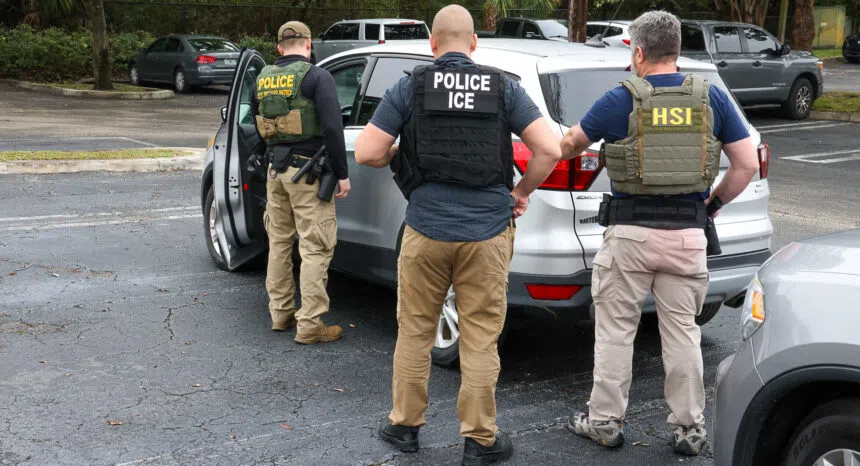
ICE officers, with assistance from Homeland Security Investigations and Border Patrol perform enforcement operations in Delray Beach, Florida on Jan. 23. (U.S. Immigration and Customs Enforcement)
ICE have been carrying out raids across the United States that have prompted mass protests. Farrell says however that this isn’t the only example of a Canadian firm making controversial military agreements.
“Even in London, Ontario, we wrestle with because we’ve got General Dynamics land systems down on Dundas Street. And so when we are donating military supplies to Ukraine, that’s jobs for welders on Dundas Street. And it’s also Canada helping out a conflict globally. When it’s something more like Saudi Arabia buying military equipment from General Dynamics and sending it, then it’s a little iffy. It makes some people uneasy if we’re supporting a repressive regime,” Farrell says about the situation locally.
Since the deal’s announcement, there has been pushback on the deal as it was defined as between ICE and Roshel, not Roshel and the U.S. government.
“They, to the extent of my knowledge, there’s another level of oversight. So it’s not like you’re selling boxes of cereal. And so when it’s things like sensitive military equipment, then there’s another level of scrutiny, and then the associated ministry would need to sign off on that and give it a green light,” Farrell says about how involved the Canadian government is in these kinds of deals.
U.S. President Donald Trump announced a new “America first” policy in February, but Farrell says that doesn’t mean making the vehicles in America if the production cost is cheaper in Canada.



