For years, sneaker culture seemed to be unstoppable. Air Jordans sold out in seconds. Yeezys broke the internet. Resale platforms exploded. And every drop felt like a special event.
But today? The hype machine is failing. The sneaker bubble finally burst.
“Sneakers are dead. The industry is destined for collapse. No one’s buying Jordans anymore. Reps are taking over. Resellers killed the game.”
Those are just some of the headlines circulating online; these loud warnings demonstrate the community’s growing concern.
To understand whether sneaker culture is truly dying, we must revisit its origins.
-
1839 — Charles Goodyear invents vulcanized rubber, paving the way for modern soles.
-
1876 — The first rubber-soled shoes appear.
-
1908 — A rubber shoe company in Boston founded Converse.
-
1964–1971 — Phil Knight and Bill Bowerman launch Blue Ribbon Sports, later renamed Nike.
-
1984–1985 — Michael Jordan signs with Nike, and the Air Jordan line hits the public. A cultural revolution begins.
Fast forward:
-
2009–2015 — Kanye West’s Nike and Adidas Yeezy lines create a modern sneaker frenzy.
-
2016 — StockX launches, formalizing the resale market.
-
2017 — Virgil Abloh’s Off-White x Air Jordan 1 redefines collaborations.
-
2020–2022 — The pandemic, supply shortages, and “The Last Dance” documentary sent sneaker interest into overdrive.
-
2023 — Sneakers reach an estimated $75 billion in global sales.
-
2024–2025 — Prices fall. Demand cools. Shelves start filling again.
What happens when the local scene dries up?
More specifically, in London, Ontario. Once home to several sneaker stores, London now has just one surviving boutique: N4E1, Not For Everyone.
Its owner, Kish, has watched the rise and fall of the sneaker wave.
“Saturation,” he says. “Overproducing of certain Jordans. Now the game’s gone back to the actual element of being a sneakerhead.”
According to him, the problem isn’t just supply; it is also fakes, which add to the hype fatigue, as well as inflated prices and declining quality, that have helped cool the frenzy.
“Fakes got really, really good. People can get them for $80 instead of $400. That’s hard to compete with. You’re paying more but getting less. Air Force 1s were $100, but of better quality. Now they’re $175 after tax.”
For Kish, there is hope, as culture isn’t dead; it’s resetting.
“It’s gone full circle. Like it was before 2014. Jordans are sitting again.”
During the research, the outcome was that brands started producing way too many pairs. What used to feel exclusive is now available on shelves. When everything’s hype, nothing’s hype.
Resale used to drive the culture, but now resellers stop caring, and the hype dies with them. Fans are getting the same shoes repeatedly, with the same silhouettes, colorways, and ideas.
Consumers are bored. Materials became cheaper, but prices continued to climb.
Fashion shifted, and youth culture moved toward runners, loafers, Crocs, clogs, and comfort wear.
London-based rapper and fashion lover 2Divine has been collecting shoes since seventh grade. But even he notices the shift.
“Reps just got so good,” he says. “But it’s not all bad. People can rock what they want. The real pairs are for the real sneakerheads.”
In today’s world, he says fashion is less about flexing hype pairs and more about variety.
“It’s not about having the sickest Jordans anymore. Birkenstock clogs, Uggs, even the dad shoes, people are exploring.”
But is sneaker culture really dying?
Maybe not dying, it is just transforming.
Kish believes it will come back around:
“Everything goes in cycles. Something new will bring the hype back.”
2Divine agrees:
“The bar for collabs is high, but something will break through. It always does.”
And the numbers back it up: even with the cooling, the sneaker industry is still projected to reach $120 billion by 2026.
But even if the sneaker game feels dead right now, it’s not gone for good. Every culture goes through cycles. This might just be the reset, clearing out the hype so real creativity can come back.
And if there’s one specific thing, it’s that sneakers aren’t going anywhere. They’re just waiting for their next spark.
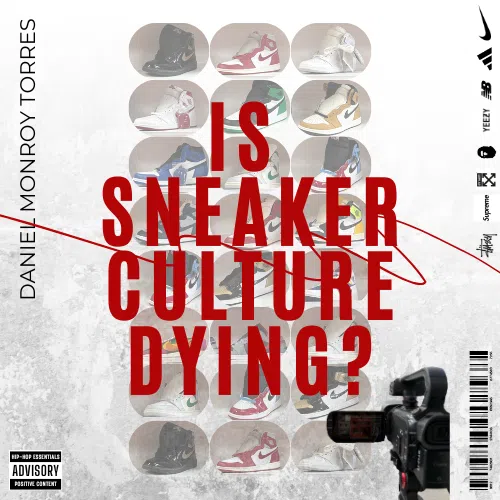
Is sneaker culture dying? Cover- By: Daniel Monroy



