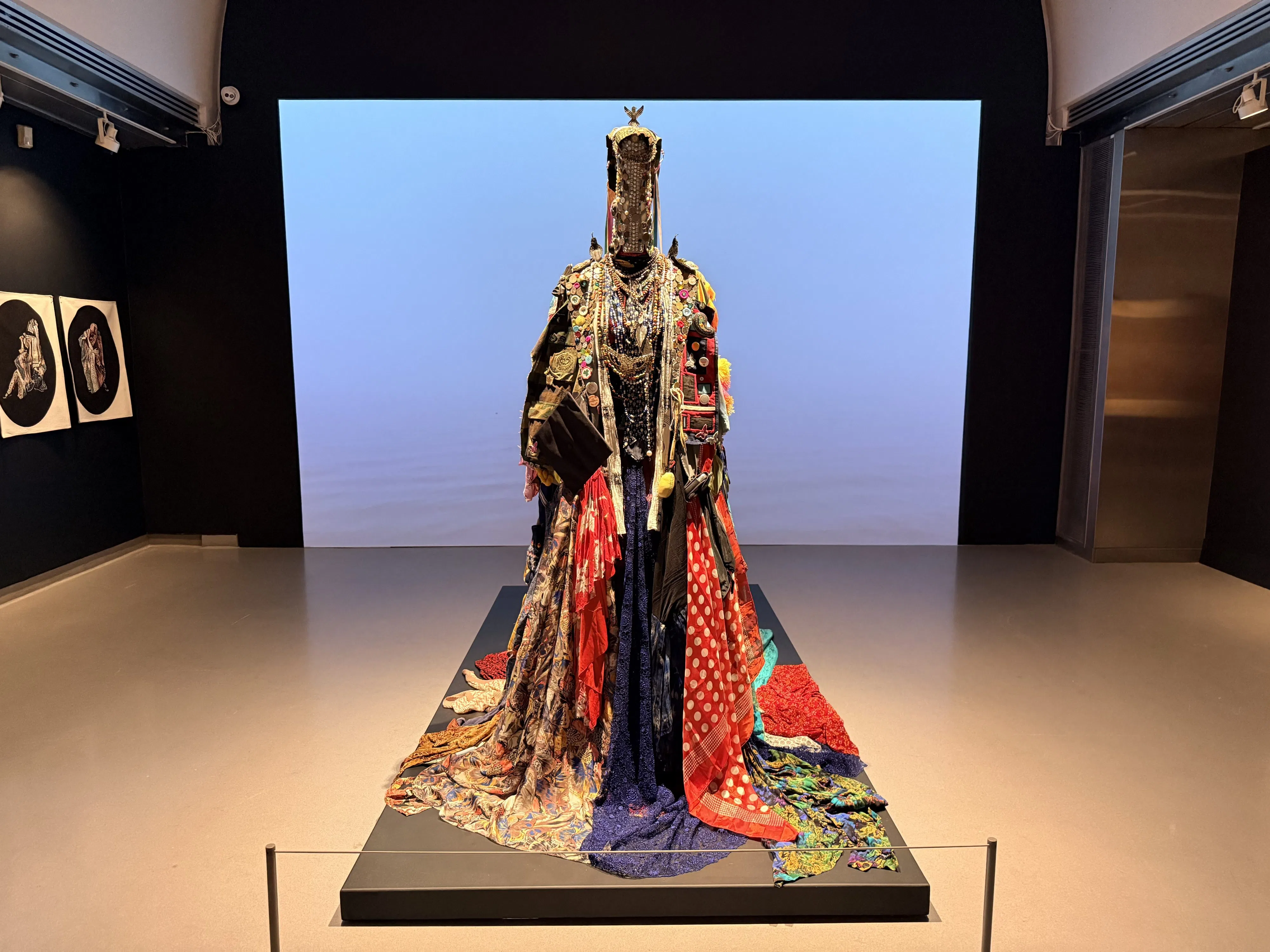
Old silver plates, wartime uniforms and small household containers gave international students a new way to understand the city they now call home.
A group of students from Fanshawe College visited the MuseumLondon Wednesday as part of International Week, getting a closer look at London, Ontario’s past. For many of them, it was their first visit to a Canadian museum.
Students learned that the London area had been inhabited by Indigenous Peoples for more than 10,000 years before being founded by settlers in 1826 as a military settlement because of its location between Toronto and Detroit. Over time, it developed into a city known for education, health care and manufacturing. The museum’s exhibits walk visitors through that history, including early family life, World War II and the COVID-19 pandemic.

Susila Talking about her experience. Credits: Prateek Ahuja
For Susila, a student from Nepal, the smallest objects left the biggest impression.
“In my country, museums mostly show how kings used to live and protect their crowns,” she said. “But here, even small containers and silver plates are preserved. Something doesn’t have to be very big to be memorable.”
She said the items reminded her of her grandparents and showed her that everyday life can also be part of history.
Mario, a student from Colombia, said he was interested in how people in London adapted during difficult times.

Mario telling what he learnt from the museum. Credits: Prateek Ahuja
“I learned about the history of Canada and things that happened here in London,” he said. “The section about COVID-19 was interesting, and also the exhibits about World War II.”
He said seeing old clothing, skis and photographs from the 18th and 19th centuries helped him picture how people lived nearly 200 years ago.
Laura Costigan, the International Projects and Exchanges Coordinator at Fanshawe College, organized the visit. She said many international students arrive without knowing much about the city.
“The museum tells you about London’s history and also shows art from local and international artists,” she said. “It’s a great opportunity for students to explore something the city has to offer.”
She encouraged students to get involved beyond orientation week.
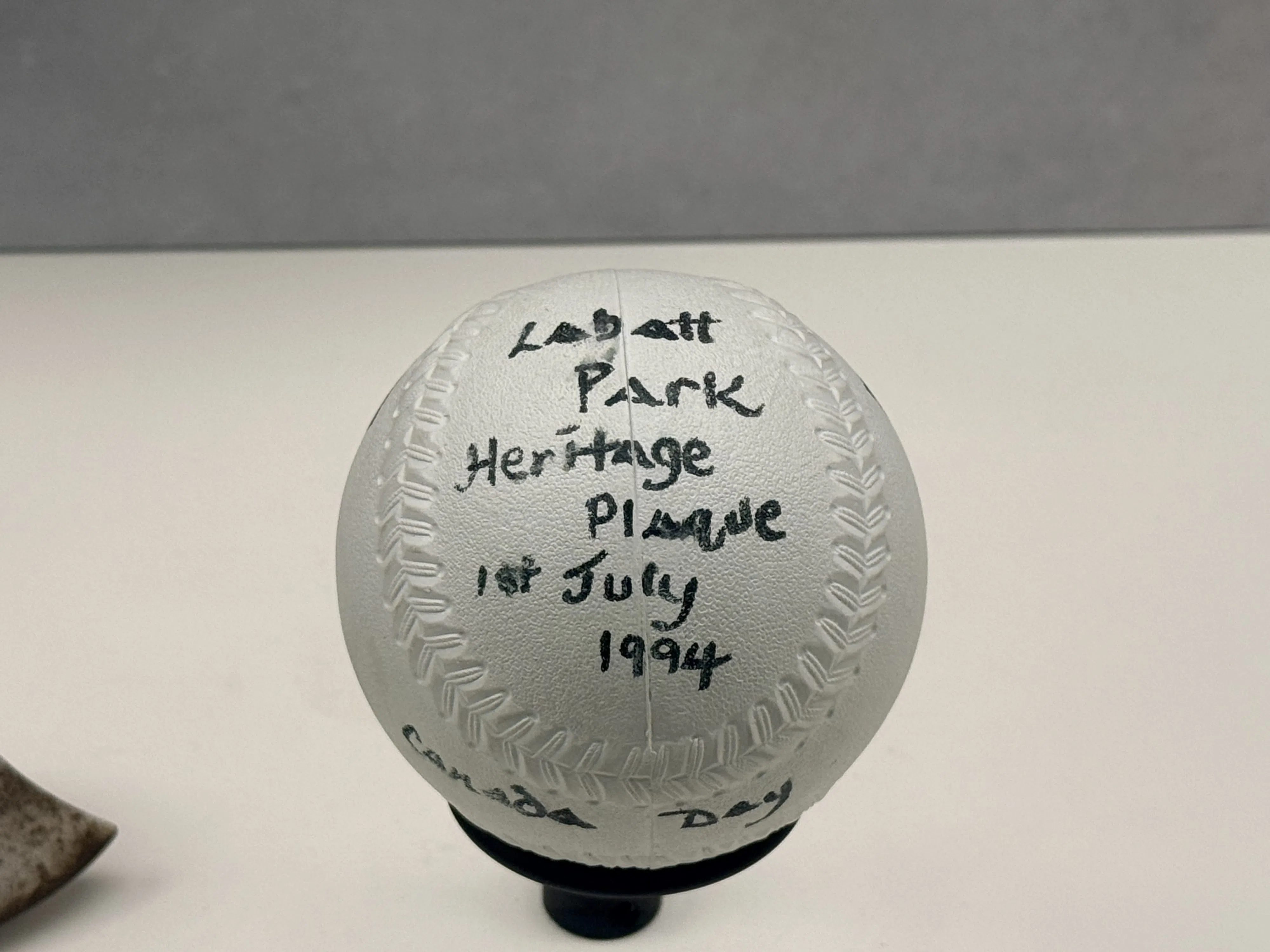
Labatt Park Heritage
“The most successful international students really put themselves out there,” she said. “They get involved in the community and take advantage of opportunities through the college and the city.”
For the students, the visit offered a chance to learn about London’s past while reflecting on their own journeys in a new country.



