A tiny monkey hugging a stuffed toy has cut through the noise of political outrage and algorithm-chasing influencers, reminding millions what the internet can look like at its best.
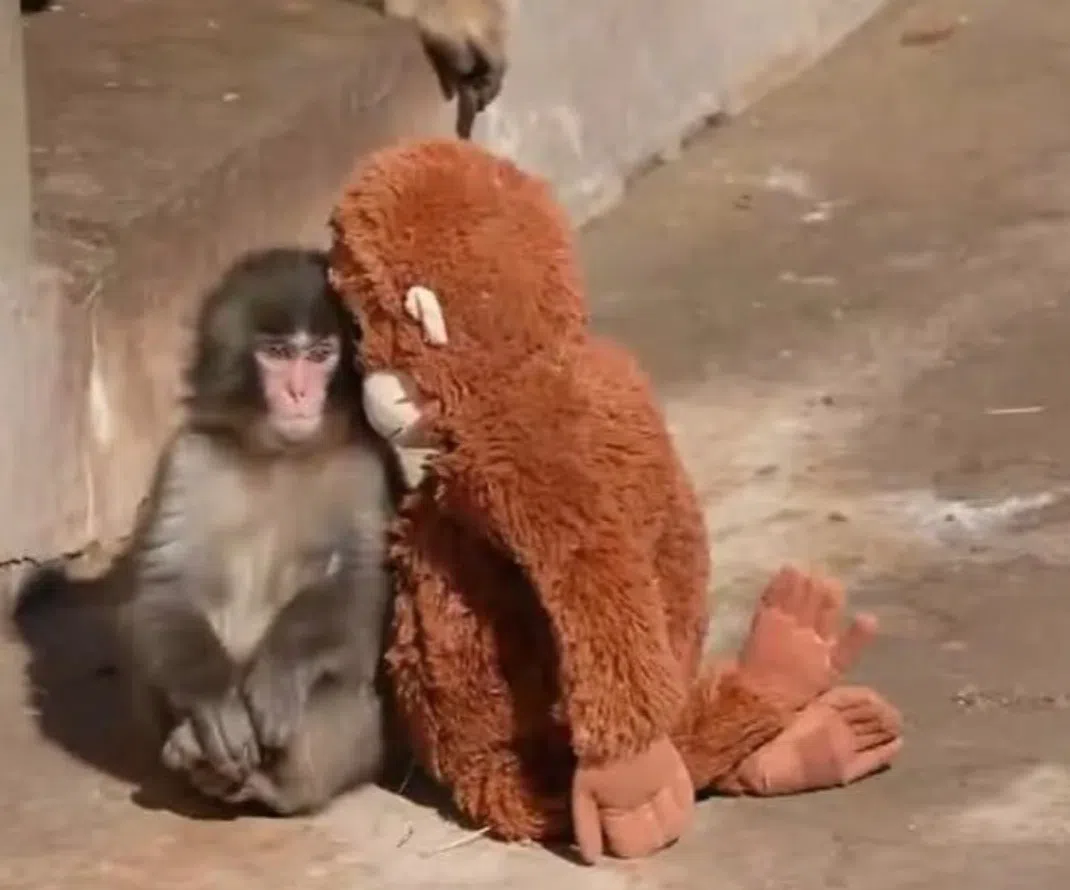
‘Punch-Kun’ with his beloved orangutan plushie (Credit: pipepuertaa / Instagram)
The viral clip of “Punch-kun,” a young monkey at a zoo in Japan, shows the small primate clutching a plush orangutan as he toddles around his enclosure. No narration, no edits, no marketing push. Just a quiet, wordless moment that has racked up millions of views and shares, offering a rare pocket of warmth in feeds often dominated by tension and bad news.
“It doesn’t need a language. It speaks to universality,” said Mohit Rajhans, a mediologist and advisor with Thingstart.ca. “When you saw a thumbnail, you didn’t need to know what country it came from. It had that immediate appeal.”
The clip’s rapid rise underscores what experts say still drives the social media economy: human emotion, timing and shareability, not secret formulas or heavy-handed amplification. Rajhans said Punch-kun’s popularity appears to have been almost entirely organic, with no significant orchestration from the zoo itself. Instead, users propelled it across platforms on their own.
“There’s several millions of dollars that are spent each day trying to find that match of what it is to connect with humans on social media apps,” Rajhans said. “And sometimes the biggest influence is that they see that the loudest voice ends up getting the most attention.”
In this case, however, the loudest voice was not outrage. It was softness.
Rajhans, who studies the intersection of culture, content and politics, attributes the video’s reach to two main factors: timing and shareability. As feeds filled with negative headlines and political conflict, the image of a small monkey hugging a toy offered a sharp contrast.
“It kept people going because they believed there was still a little place in this world where you could go and experience this excitement on your own,” he said.
Students who encountered the clip say its emotional pull was immediate. Myra, a Fanshawe student, described it as “so sweet,” adding, “I really wish I could fly to Japan, and adopt him.” She believes the reaction reflects how humans are wired. “I think it’s just human nature to empathize with animals more than anything else,” she said. “When we look at a really cute animal, that is just our brain telling us we think it’s cute.”
Another student, Brady, said the timing amplified its impact. “A lot of what you see out there is negative stuff, especially with politics and stuff like that in the current world,” he said. “So I think it makes a difference that it’s something that people can relate to, something positive, something that’s not all negative.”
Video footage of animals crosses cultural lines quickly. While reactions may vary slightly from country to country, the emotional core remains consistent. “If you watch different videos from between Australia and India, say, or Canada versus some other country, you will notice that there are some things that are absolutely consistent,” Rajhans said.
In a digital environment Rajhans describes as dominated by “rage scrolling,” Punch-kun’s gentle attachment to a padded toy serves as a reminder of what first drew many users online: small, human moments, even when they belong to a monkey halfway around the world.
“It’s really incredible,” Rajhans said, “to see something go viral for mostly positive reasons.”
Punch-kun continues to swing through social media feeds.



