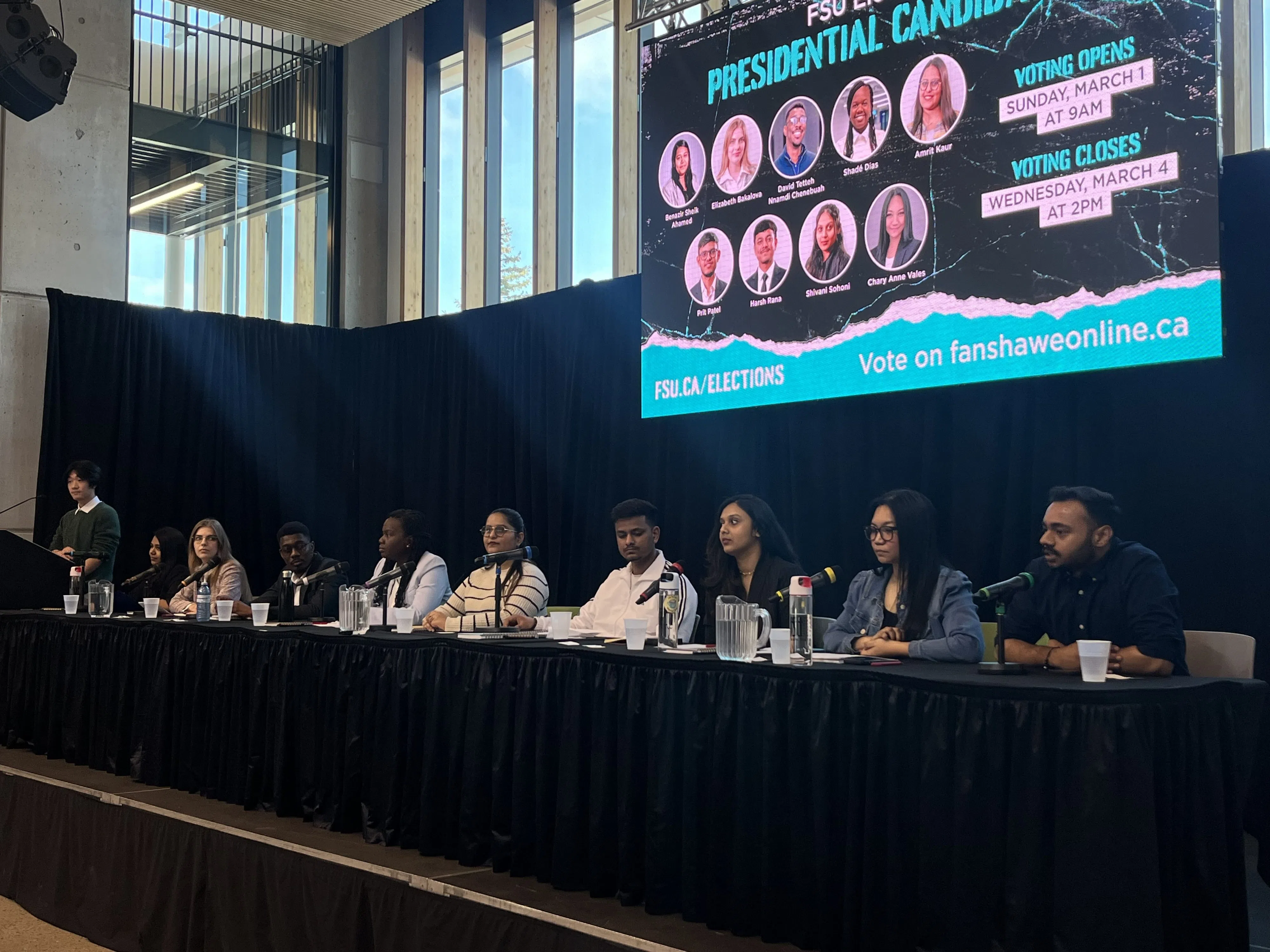
Financial concerns have been high amongst post-secondary students in recent days, with a presidential debate at Fanshawe College on Thursday shedding light on the importance of student security.
Nine candidates running for Fanshawe Student Union (FSU) President shared their strategies on tackling issues including the housing crisis, lack of employment, food insecurity, and the Ontario Student Assistance Program (OSAP) cuts.
This comes after Premier Doug Ford’s decision to slash OSAP grants from a maximum of 85 per cent coverage down to 25 per cent. Ford also set government loans at a minimum of 75 per cent versus 15 per cent from before, sparking mass outrage from students across the province.

Fanshawe student and campaign committee member, Naimah Rampassard. Feb. 26, 2026. (Naomi Ljunggren / XFM News)
“I feel like there’s a lot of students who won’t even wanna continue their secondary programs,” said Fanshawe student and campaign committee member, Naimah Rampassard.
She says the next FSU President should find ways to support students better, as “not a lot have that financial support.”
“I’m looking for a president who will be consistent, actually look out for their people, and actually wants the best for us,” said Rampassard.
On a post to social media platform Reddit last week, one student made a statement claiming that the FSU’s practices are “out of touch and useless.”
“The Fanshawe Student Union feels completely disconnected from the students it’s supposed to represent,” read the post from @al_student.
“Students pay a significant amount in ancillary fees every semester. Yes, the bus pass and health plan are valuable, but beyond those essentials, what are students actually getting for the money?”
The FSU President helps oversee many areas that students fund through tuition costs, including health services, bursaries and awards, events, clubs, and athletics. With Ontario passing Bill 33 in 2025, an act that allows provincial regulation on student fees, Fanshawe students can choose to opt out of certain ancillary costs.
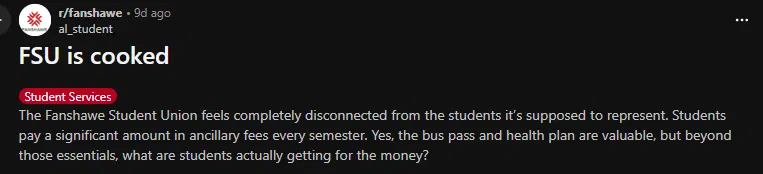
Reddit post from user “al_student” on r/fanshawe. Feb. 17, 2026. (Naomi Ljunggren / XFM News)
“If the FSU continues to spend student money on low-quality social media and underwhelming events without clear value, opting out starts to feel like the best thing to do,” read the post.
The FSU launched a student feedback page this past year to hear what students are asking for from college leaders, said Jerry Thomas, current FSU President.
Fanshawe Student Union 2025-2026 President, Jerry Thomas. (Source:
Jerry Thomas via LinkedIn)
“There will always be ways to connect because that’s how we communicate well with the students,” said Thomas.
The union also posts weekly roundups, said Thomas, with updated information on how the student community is being represented and advocated for. Meetings and discussions are also held by FSU leaders with government officials on the municipal, provincial, and federal levels to talk about student concerns.
“Stories are really important, because those are the moving factors when we go out there, talk to any minister, and tell them the real-life stories which moves them and makes impact,” said Thomas.
He confirmed that the most pressing issues being passed onto the next elected president will be OSAP cuts and Bill 33. OSAP will greatly impact domestic students at the college, said Thomas, and Bill 33 is changing the student fees and budget for the FSU.
“Looking in terms of future, how does [the changes] fit within our budget?…My hope from next president will be to focus on these things,” said Thomas.
Students can cast their votes for the next FSU President between March 1-4 through the FanshaweOnline portal.
More information on candidates and their platforms can be found here.



