
Nearly two decades after its release, The Black Parade album by My Chemical Romance continues to attract attention from fans and critics as the band revisits the album through its 2025 Long Live: The Black Parade tour and its 2026 continuation.
My Chemical Romance formed in Newark, New Jersey, in 2001. Vocalist Gerard Way started the band shortly after the Sept. 11 attacks, later recruiting guitarist Ray Toro, bassist Mikey Way and guitarist Frank Iero.
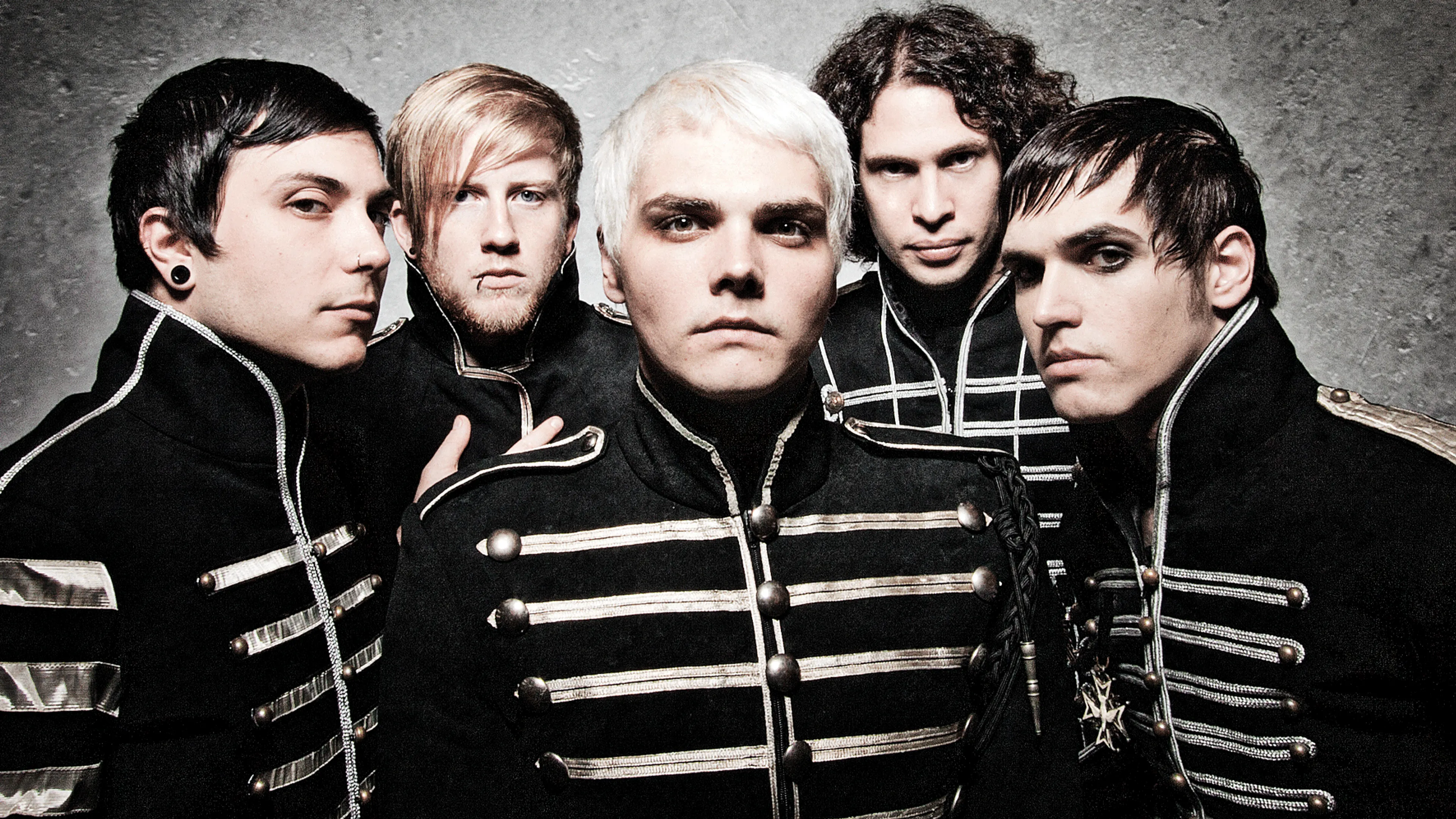
My Chemical Romance, 2006. (Credit: Paul Harries / www.kerrang.com)
The group released its debut album, I Brought You My Bullets, You Brought Me Your Love, in 2002 before gaining wider recognition with Three Cheers for Sweet Revenge in 2004. By the time the band began working on The Black Parade, My Chemical Romance had become one of the most visible bands associated with the growing alternative rock and emo scene of the mid-2000s.
The Black Parade introduced a narrative storyline centred on a character known as “The Patient,” a dying man reflecting on his life as he faces death. The album combined elements of emo and alternative rock with theatrical presentation and storytelling, including imagery of a marching band known as the Black Parade.
Nearly two decades after its release, The Black Parade album continues to be examined for its theatrical presentation, concept and influence on alternative rock.
Music journalist Alan Cross from the longstanding The Ongoing History of New Music podcast says the album can be understood as part of the long tradition of rock concept albums, where songs are connected through a central narrative.
“Concept albums are risky because you are hoping that you’re going to create something that will take your listener on a journey… you want to tell a story with a beginning, middle and end,” Cross said.
Concept albums have existed for decades, including works such as Tommy by The Who and The Wall by Pink Floyd. These projects use a central narrative or theme to connect songs across an album.
Cross says projects like The Black Parade work when artists fully commit to the concept.
“They basically offer a novel in the form of an album,” Cross said.
The album dropped during the peak of third-wave emo in the early 2000s. Bands associated with the movement gained widespread popularity, particularly among younger audiences.
Cross says My Chemical Romance’s rise in the early 2000s reflected the growing popularity of emo and alternative rock at the time.
“They came along in the early 2000s… the first album did OK, the second did even better, and then we finally get to the third album, The Black Parade, which is the one that changed everything for them,” Cross said.
Commercially, The Black Parade was very successful when it was released. The album debuted at No. 2 on the Billboard 200 chart and eventually received platinum certification.

Gerard Way of My Chemical Romance performing on the first night of the Long Live The Black Parade Tour. (Credit: Jmfstopimages / Instagram)
The band later revisited the record during the Long Live: The Black Parade tour in 2025. When announcing the tour, the band introduced additional story elements set in a fictional location called Draag, expanding the album’s narrative world.
After the 2025 North American run, My Chemical Romance extended the tour well into 2026, with dates across Latin America, Asia, the U.K., Europe, and North America, including multiple Wembley Stadium shows and a three-night run at the Hollywood Bowl.
For Cross, the continued interest in the album reflects the influence of strong storytelling in music.
“You’re dealing with this person who is approaching the end of their life… they present it in a very evocative way, a very emotional way. Who wouldn’t want to go on that particular story?” Cross said.
Nearly two decades after its release, The Black Parade continues to be discussed, performed and interpreted by fans, showing the lasting impact of the album and its concept.



