

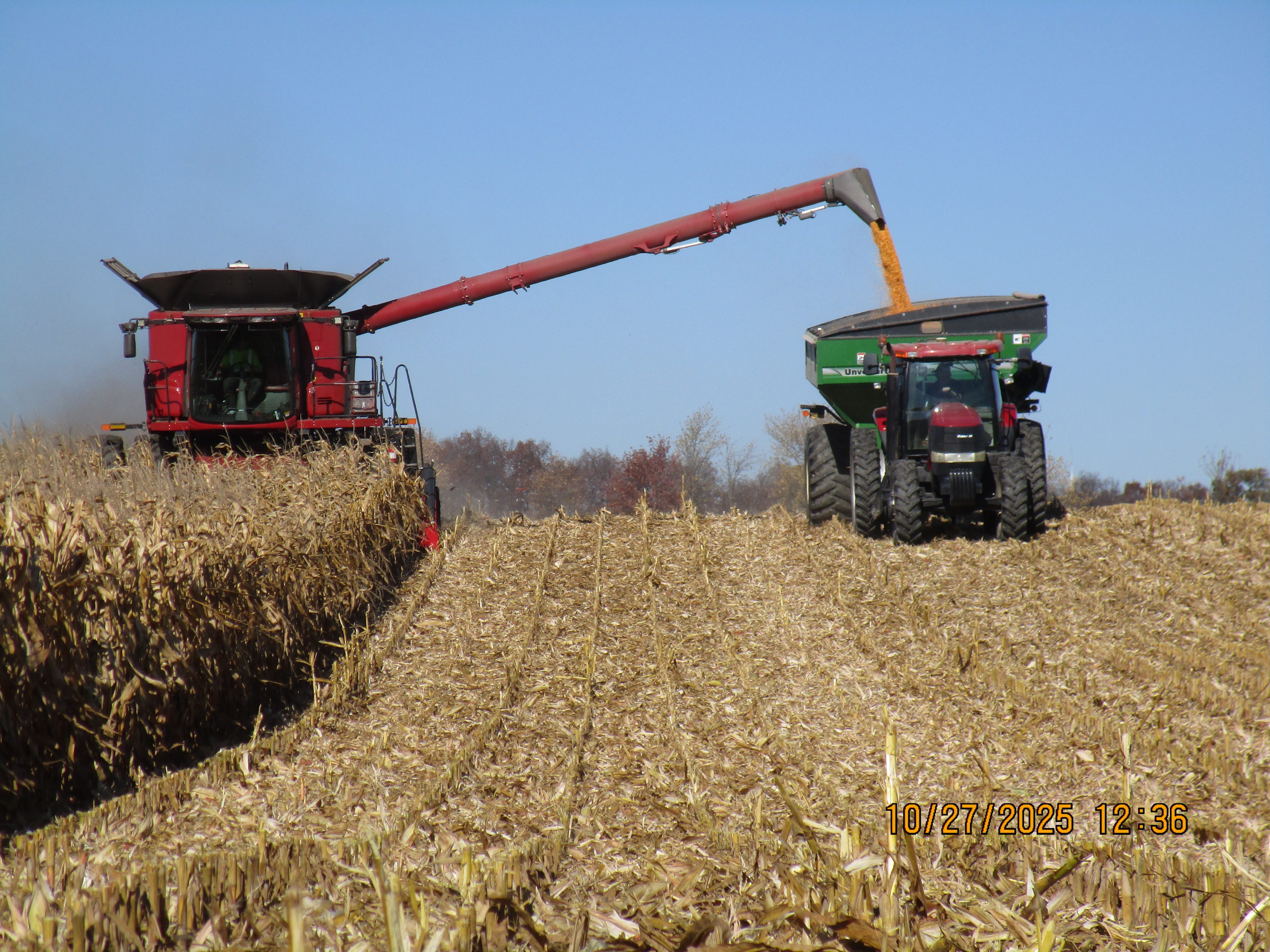
With the warm, dry fall weather southwestern Ontario experienced this past October, farmers across the region reaped the rewards through their harvests in a way one farmer believes will pay off again this upcoming spring. Whether or not the benefits will become a recurring trend, however, is something he is less certain about.
Strathroy-area egg farmer Nick Stokman grew primarily soy beans and corn this year, and planted winter wheat once they were both harvested. He said that harvesting them went well in multiple factors, particularly because the ground in the fields was dry.
“The equipment didn’t have to work real hard as far as you weren’t doing any compaction,” Stokman explained.
Compaction refers to when the ground is packed down under the wheels of large, heavy farm equipment. Stokman explained that soil composition is ideally a mixture of 50 per cent air space, 25 per cent minerals, and 25 per cent water. This can be thrown out of balance by farm equipment running across wet soil, making it more difficult to harvest and later to plant and cultivate.
Stokman believes that the uncompacted soil in his fields will help the crops he plants in the spring grow better.
“If we don’t do any [compaction] now, that means we’re starting on a much better plane next spring when we’re planting, and giving that seed much more opportunity to produce its maximum yield,” he said.
While he and other farmers may get a better yield on next year’s crops, Stokman said that it will not affect the prices farmers in southwestern Ontario are able to sell their crops for, specifying that geopolitical events make a much greater impact.
Beyond year-to-year affects, Stokman is also aware of the long-term trends for the month of October. Stokman has collected climatological data for Environment Canada for several decades. According to long-term data he has collected, the average temperature for the month of October since 1998 has been 10.82 degrees Celsius, while the average amount of rainfall has been 88.7 millimetres.
By comparison, October 2026 had an average temperature of 12.34 degrees Celsius and 66.4 millimetres of rain, which points to temperatures generally and gradually getting warmer as the years pass.
Even so, Stokman was quick to point out the difference between weather and climate, adding that it is difficult to find and establish a climate trend with how unpredictable weather can be.
“There’s significant variation from year to year,” he said, illustrating his point by referring to long-term records dating back to 2007. That year, according to the data, the average temperature for October was 14.51 degrees.
Ultimately, though the weather may be hard to predict, Stokman said he and other farmers enjoy the wider window of opportunity that a warm, dry October provides them.
“They would love to be able to hit the ‘repeat’ button next year,” Stokman said.



