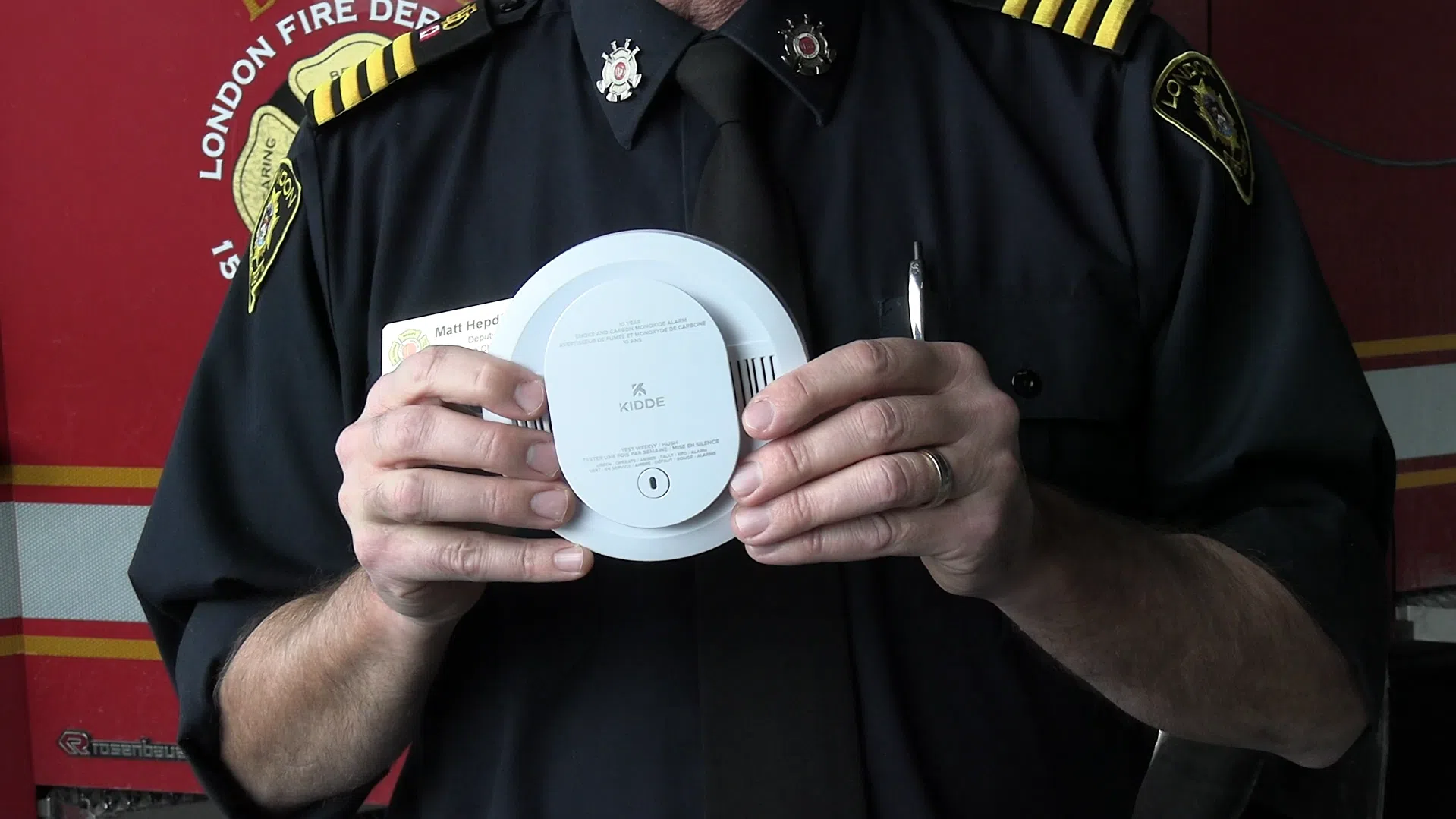
Changes to the Ontario Fire Code are coming, including updates to the current laws surrounding carbon monoxide alarms.
As of Jan. 1, 2026, Ontario law will require carbon monoxide alarms to be installed on every floor of homes, including floors that do not have sleeping areas.
Another change being introduced in the new year is alarms must be installed if a home is heated by air from a fuel-burning appliance that is not contained within the home.
“Currently, in 2025, carbon monoxide alarms are required to be installed adjacent to all sleeping areas,” said Matt Hepditch, Deputy Fire Chief of fire prevention with the London Fire Department.
“However, as of Jan. 1, 2026, carbon monoxide or CO alarms are required to be installed on every floor of your home.”
The Ontario Fire Code, as of publication, requires that carbon monoxide alarms must be installed when a home:
- has a fuel-burning appliance,
- has a fireplace, and
- has an attached garage.
Hepditch said carbon monoxide comes from incomplete combustion for fuel-fired appliances, such as furnaces, hot water heaters, and even cars in garages.

London Fire Department Engine 1 at fire headquarters Dec. 11, 2025. (Hayden King/XFM News)
“Carbon monoxide is known as the ‘silent killer’,” he said. “You can’t see, smell, or taste it.”
“The only way you’re going to know that there’s carbon monoxide in your home is by having your carbon monoxide alarm.”
The fire department recommends installing combination smoke and carbon monoxide alarms, but Hepditch said you can have a plug-in, battery powered, or hard-wired alarm in your home.
Hepditch said you can pick up an alarm at any hardware across the city and that alarms are often handed out by the fire department to low income people or seniors through the “Sound the Alarm, Stay Safe, London” alarm program.



