
Mental health has always been an issue that is not talked about enough. With so many different issues occurring to each and every individual, you may feel extremely stressed at times that may lead to depression and anxiety.
An article from the World Health Organization (WHO) shows that the COVID-19 pandemic triggered a 25 per cent increase in anxiety and depression worldwide.
With the pandemic ending years later, anxiety and depression still stands very strong in many individuals lives.
Students especially are hit hard with stress with them balancing their academics, leisure, work, and even sports for some athletes.
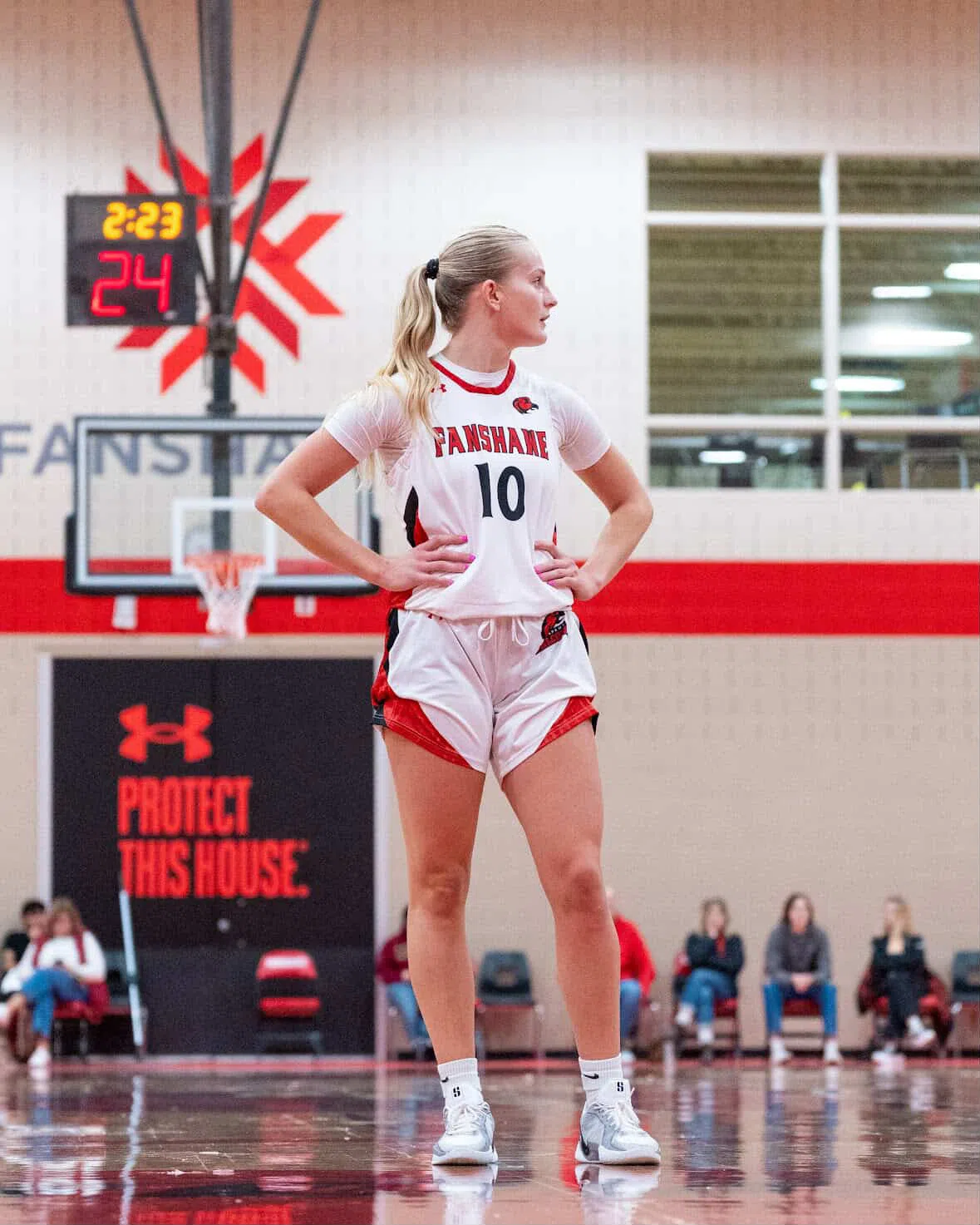
Layla Mackenzie during a game (Via Layla Mackenzie)
Star basketball player for the Fanshawe Falcons Layla Mackenzie, talks about how hard it is for her to balance her academics, along with her practices and games she has.
“We all have to maintain a high enough GPA to even be eligible to play and then balance practice two hours every day plus extra film, like lifts, things like that,” she said. “It gets pretty crazy and school can be kind of left on the back burner sometimes.”
Mackenzie talks about one of the things she personally does to help balance everything.
“The biggest thing I do is making sure I have everything scheduled out, what I need to get done, because I can’t focus on one thing more than the other,” she said.
“You need both to be successful. So just not procrastinating, being mindful of my time, making sure I’m getting everything done is definitely most important.”
Commentators are other people who impact the mental health of athletes a lot. One player has a bad game and if the commentators say mean things about them during the game, a lot of fans are going to follow suit.
Award winning broadcaster Dan McCracken, who currently does play-by-play for the London Junior Knights U16 AAA team, along with Fanshawe Falcons basketball and volleyball games, talks about how he has seen the conversation around mental health change in recent years.

Sports broadcaster Dan McCracken speaks to XFM News Jan. 26, 2026. (Logan Libiec/XFM News)
“It’s cool to see Bell Let’s Talk Day become an important part, it allows space for those athletes to kind of speak out when they need to,” he said. “A lot of times in the past everyone knows it’s kind of frowned upon, especially the stigma kind of more in men’s.”
McCracken continues, “I think some of the coaches, a lot of the teachers at the school try and provide counseling resources and stuff like that and make it kind of an open space, which is a great thing.”
Especially with younger athletes, either school-athletes or even OHL players have huge pressures on them, especially with the fanbase that they gain. McCracken talks about the realization he had with him going to high school with an OHL player.
“I remember going to high school back in the day with a guy who was playing in the OHL at the time, and it give that kind of real perspective of, this is literally just another person just like I am who probably has problems that they’re going home to, and maybe had a big argument with their mom or dad, or even got in a fight with their boyfriend or girlfriend,” he said. “Real life is everywhere.”
With these realizations, we need to put less pressure on these young athletes as they are normal students just like us trying to achieve a degree while playing a sport that they grew up loving.
The same is said for athletes in big sports organizations, they are people just like us. Even if they have a bad performance they are already thinking of what they could have done better during the game and the negative fan outlook that could happen thanks to the performance can hinder their mental health in a bad way.
We saw this with Ottawa Senators goalie Linus Ullmark, with him discussing his leave of absence from the Senators which lasted almost a month.
In conclusion, the next time you are watching a sports game from any organization, put yourself in the players shoes.
If you had a bad performance and the fanbase was letting you hear it. How would that affect your mental health?
If you would like to find more about student athletes and their mental health, tune into the Almost 107 podcast wherever you get your podcasts or click the video above to watch the video podcast.
If you, or anyone you know are struggling with mental health. You can reach out to any of the following numbers:
9-8-8 Suicide Crisis Helpline: Call or text 9-8-8
Kids Help Phone: Call 1-800-668-6868 or text CONNECT to 686868
Hope for Wellness Help Line (Indigenous peoples) 1-855-242-3310



