

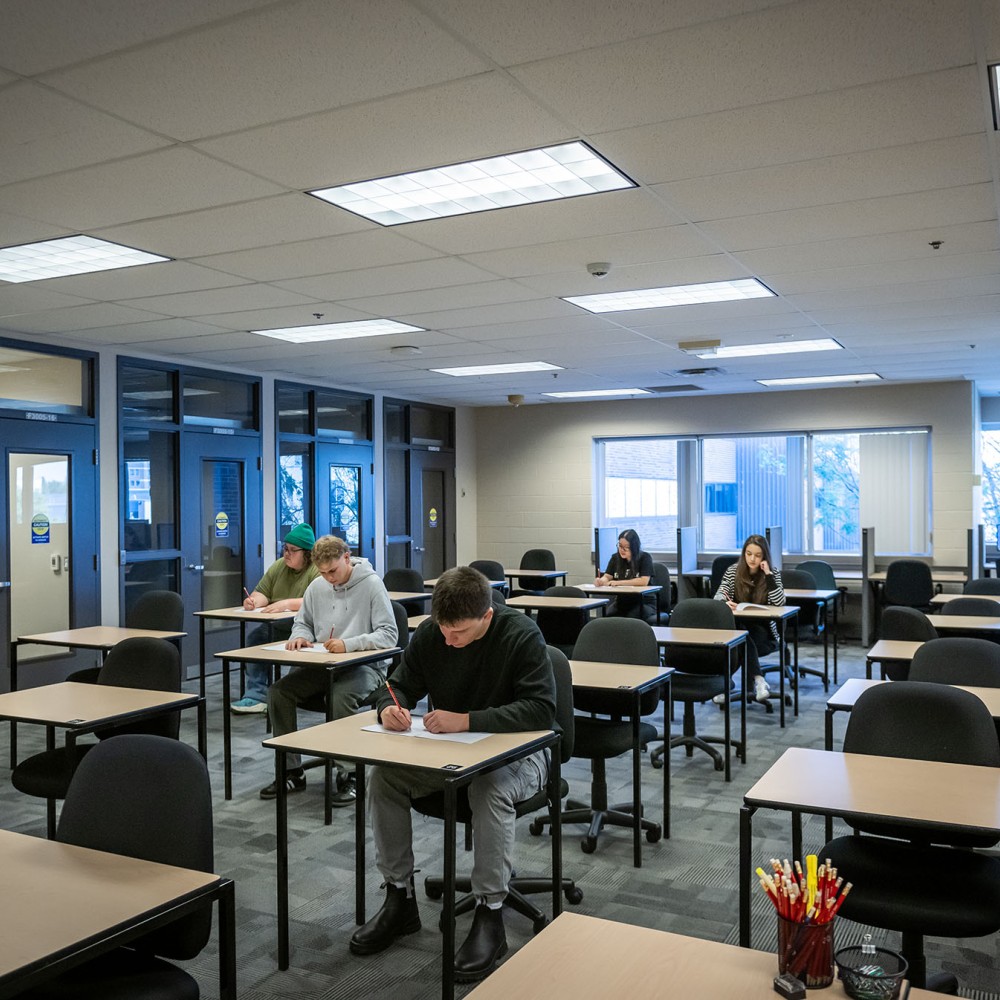
Artificial intelligence (AI), is changing the way students approach schoolwork, with some using it regularly, while other refuse to use it.
Jada Kaasti, London Christian High student, said that AI has changed the way she completes assignments, and that teachers are vague on telling the rules of AI use.
“It makes it so much easier. Now it feels like there’s less effort I have to put into it. It’s not as hard to keep my grades up,” she said.

Jada Kaasti, London Christian High, grade 12, photo: (Torey Joseph Legarrie)
“Sometimes, but not always. Usually it’s vague,” she said.
The growing use of AI is making professors rethink how they create and grade assignments, while raising questions about it’s potential impact on student learning and critical-thinking skills.
Jeff Miles, associate dean, school of arts and language at Fanshawe College said that it’s trickier now.
“So for example, a lot of our online courses used to be essay-based. So students would write their essay and then put them in a submissions folder. That’s a little bit tricker now because we can’t be certain who actually did the work,” he said.

Jeff Miles, associate dean, school of arts and language, photo: (LinkedIn)
“It’s created a lot of difficulty in students submitting essays because we’re not sure if they’ve actually done the work or not, or if it’s just the writing has been done by ChatGPT,” he said.
“There’s AI detectors out there, of course. But the AI detectors are not very reliable. So sometimes professors will use a high AI detection score,” he said.
He said the rules are clear if you are allowed or not allowed to use AI.
“Absolutely. So one of the college requirements is that we need to indicate on assignments what level of AI is acceptable,” he said.
In 2026, over half of U.S students aged 13 – 17 use it. 57 per cent searching information, 54 per cent in education, and 47 per cent for entertainment.
AI use is rising. For example, 19.2 per cent of Canadian businesses reported the use of AI to produce goods and deliver services in 2026.
Fanshawe College student Josh Dinkel said that he will never use AI because it is prone to be inaccurate, and can provide false information.
“AI is prone to many mistakes and hallucinates a bunch of random things that don’t happen, and it brings up random sources that don’t involve the thing that you may look up,” he said.

Josh Dinkel, electrical engineering technology, year 1, photo: (Torey Joseph Legarrie)
Dinkel said that he students who do use AI don’t have an advantage.
“No, not really, because it could mess something up and it could bring their grades down. Or they could get something wrong and put it down,” he said.
Dr. David Bourget, associate professor of philosophy and MATCHA developer at Western University said that using AI negatively affects students’ learning.
“It obviously can affect their learning negatively if they don’t learn, because they’re doing everything with AI, which you know, when measures are not taken, that can happen,” he said.
He said that because AI is so intelligent, it has affected people getting hired for entry level jobs as they are not needed anymore, but universities and colleges are on top of it.
“AI can do a lot of what people do in their desk jobs, and that creates a situation where effectively entry level jobs are not needed anymore. AI right now can replace entry level programmers very well. For example, that’s probably the field that’s the most affected at this time,” he said.
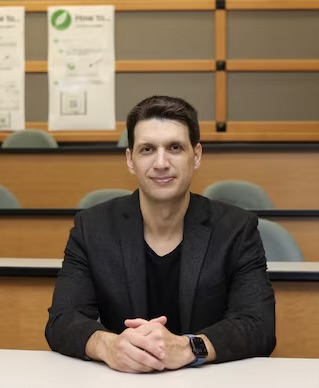
Dr. David Bourget, associate professor of philosophy and MATCHA developer, photo: (The Globe and Mail)
“Right now universities and colleges are geared towards training people for the entry level positions for those positions of disappearing, so they need to start aiming higher. They need to provide more training,” he said.
He said that he predicts that the future with AI will be not only be more strict on the rules for using it, but students will also be prepared on how they can use it.
“I think probably we’re gonna be systematically, holding back AI in some ways. But also, of course, trying to prepare students to use it in other ways,” he said.



