


Artificial Intelligence has made it easier and faster than ever for scammers to trick people into giving up personal information and money, say police and technology experts.
One technology expert says he uses a password with his family to prevent scams.
“I’ve seen people lose everything in one day,” said Carmi Levy a technology analyst and journalist in London.
“As technology gets better scammers have better tools to make it look less like a scam, and cover more ground all at the same time,” Levy said

Carmi Levy (Credit: Daniel Thuss XFM News)
As AI becomes more advanced scammers have the tools to make it look or sound more realistic.
“With all social media all it takes is one video or photo you post for scammers to use against people you know,” Levy said
The ‘grandfather scam’ is one of the more common scams used among people of all ages especially people over 60, said Levy. It’s becoming more common as scammers are able to use AI to make their voice sound almost identical to a loved one. They would act like someone you care about saying they have been in an accident saying they need money to pay for damages.
Since 2022 over $2.4 billion has been reported stolen through scams.
“It is used to get inside our circle of trust, if you think it’s someone close to you and it’s a tragedy, you will get emotional and make decisions you normally wouldn’t make,”
Levy and his family use a code word if any of these incidents happen. If they get any call suspected to be a relative he ask for “what’s our code word” if the person doesn’t know it is a scammer.
“It’s a rule I taught my kids and I think every family should do is sit at the table, create a word that everyone will know and that’s how we identify a scammer,”
Levy also stated no one is safe as even young people who think they know a scam when they see one still can fall for it. As scammers also use AI videos trying to target all age levels.
The most common scam people face are ‘imposter scams’ where scammers pose as a bank employee, a member of the school, or government agencies demanding or asking for money.
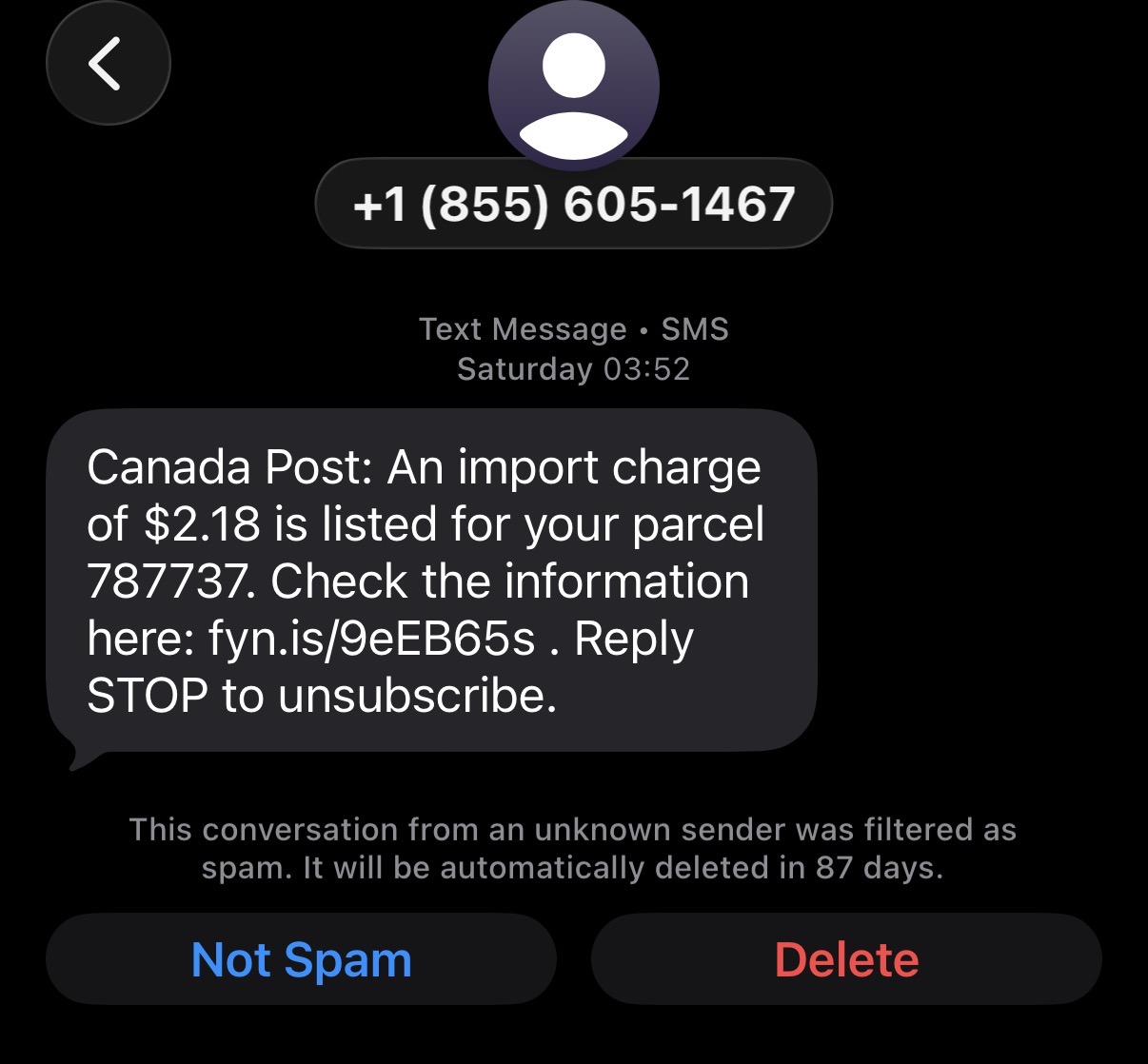
Screenshot of an import charge scam (Credit: Daniel Thuss XFM news)
“Your bank, never calls you out of the blue, same thing with your school, and government agencies. sometimes it’s ok to be rude to stop the interaction and do your own research. Because nine out ten times it is a scam,” said Levy
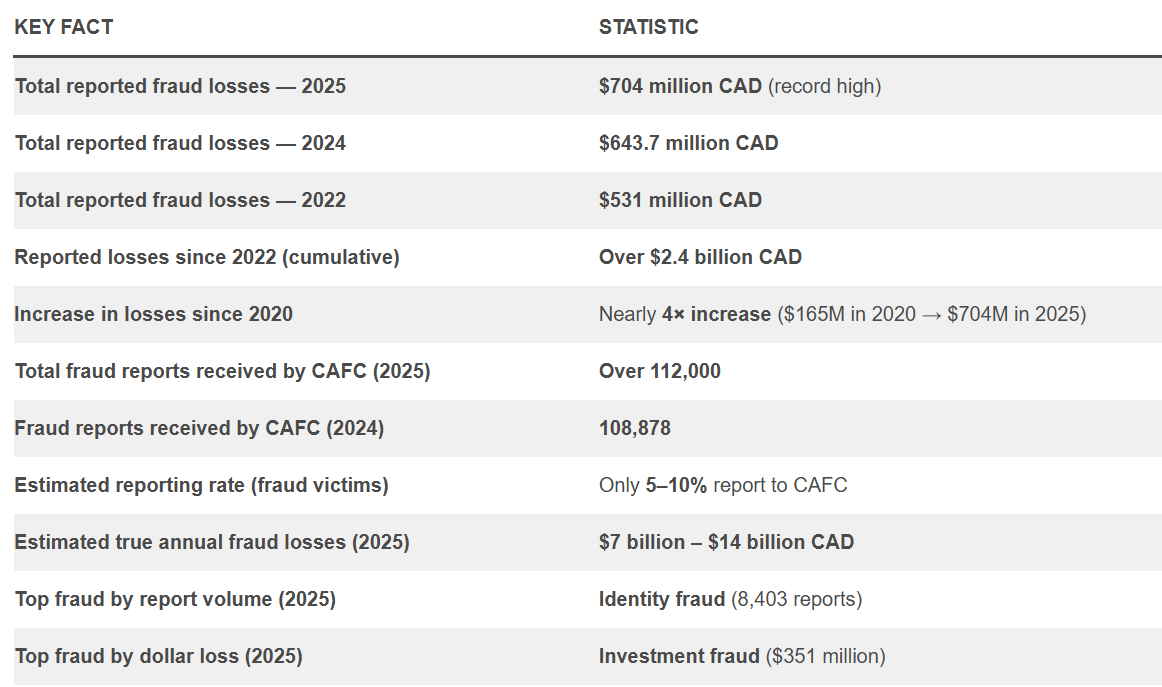
CAFC fraud numbers (Credit: The Global Statstics)
The Canadian Anti-Fraud Centre (CAFC) received over 122 thousand fraud reports through 2025 and it was estimated that it counted for only 5-10% of nation wide frauds.
Investment fraud in 2025 reached a record high of over $351 million lost to scams, which totals around 50% of the total fraud lost in 2025. In 2024 it was reported by CAFC that almost a quarter of seniors in Canada lost money to scams with an average lost of over $21 thousand. For more information London Police Service has an Elderly Safety page.
If you or know someone that has been scammed you can contact the CAFC or your local police fraud services.



