It was the partnership of Banting and Best 100 years ago, that would lead to the life altering discovery of insulin. This discovery would go on to reverse type 1 diabetes from a fatal diagnosis to a manageable but chronic health condition.
At the time little was known about diabetes. In 1920, doctors knew that diabetes prevented the body from breaking down sugar, but they also knew that the disease was a death sentence.
“It was not known what the cause was, but it was known what the effects were,” says Dr. Robert Hegele, Director of the Blackburn Cardiovascular Genetics Laboratory at Robert Research Institute.
“Patients would suddenly be losing weight, and they would be hungry and thirsty all the time. It was called Starvation in the Midst of Plenty. They could eat all they wanted, and they’d still be losing weight, because of the lack of insulin.”
The brilliant discovery of insulin had humble beginnings at the Banting House on Adelaide Street right here in London, Ont.
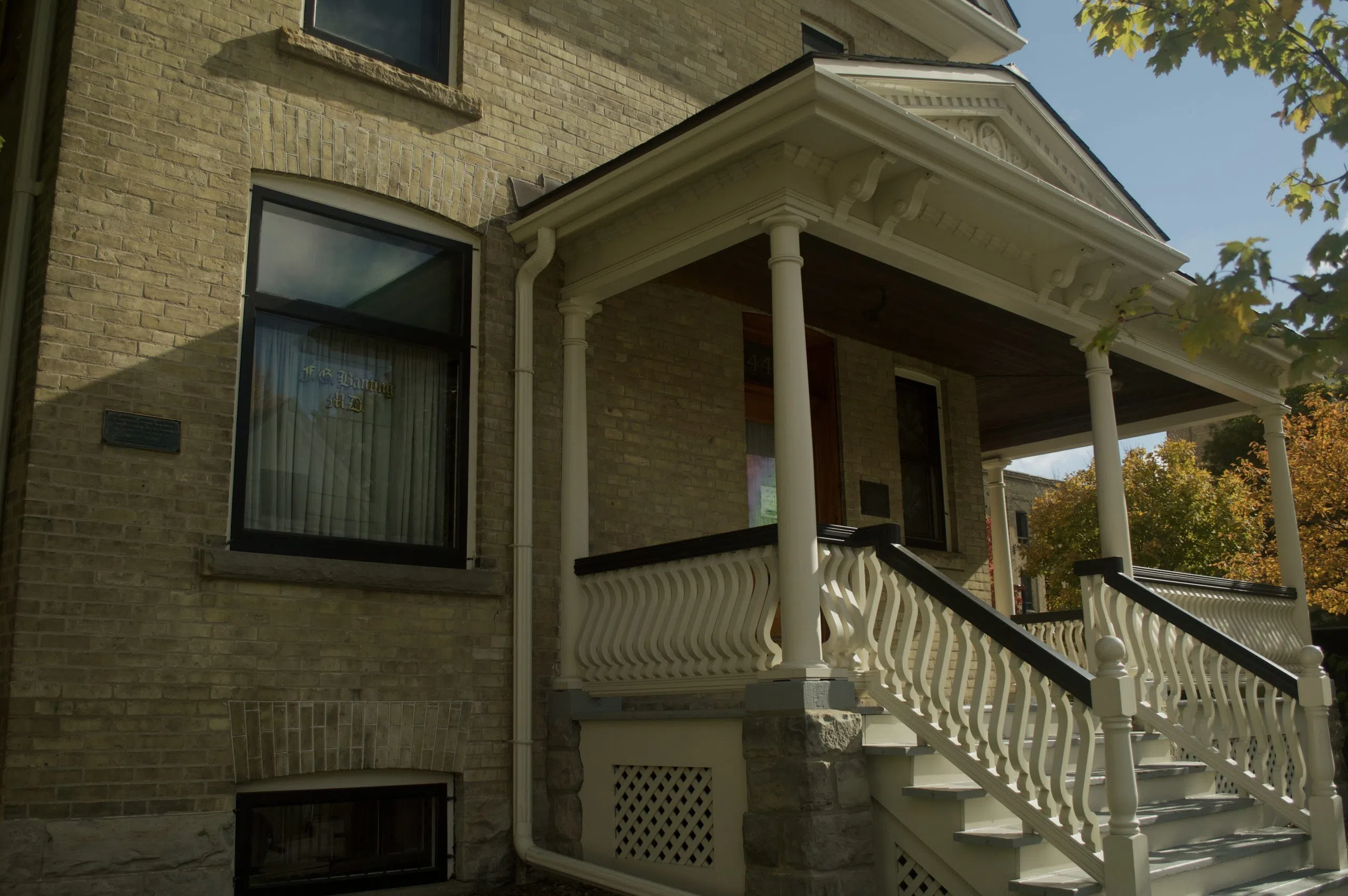
The Banting House, 442 Adelaide St N., London, Ont. (Angelique Guerard/XFM News)
Dr. Frederick Banting moved into the house in July of 1920 and opened his own private practice after his residency at the Children’s Hospital in Toronto came to an end. But his new practice had little success in the city.
In search of more work to stay afloat, he found himself seeking a teaching position in Western’s Department of Physiology. There he worked as a part time instructor in anatomy and surgery.
A few weeks into his new position, Dr. Banting was asked to prepare a lesson on the pancreas; something he knew little about at the time.
It was his job to educate, so he stayed up for hours reading about the organ’s function.
In his tiny bedroom on the house’s second floor, Dr. Banting played chase with an idea in his head. Bursting out from under the covers, he sat at his desk and wrote down a thesis in the middle of the night:
“Diabetes ligate pancreatic ducts… keep dogs alive till acini degenerate leaving islets. Try to isolate the internal secretion of these and relieve glycosuria.” – Frederick Banting’s thesis, 1920
The doctor made his way to the University of Toronto with his idea in tow, as Western wasn’t suited for the type of research needed.
Dr. Banting expressed his idea to a skeptical John Macleod, a physiologist at the university who helped find Banting an assistant and a lab to work in. Charles Best took up the assisting position and together the two men figured out a way to purify and refine insulin.
By 1922, bio-chemist James B. Collip joined the team and successfully isolated insulin in a way that was safe for human use.
This discovery saved millions of lives around the world and catapulted Dr. Banting to international fame.
“He became one of the first to actually get that celebrity scientist status,” says Ali, a tour guide at the Banting House. “They put him on Time Magazine, which was a really big accomplishment for him.”
In 1923, the Nobel Prize was awarded to Banting and Macleod. While the Nobel Prize failed to recognize Best and Collip for their contributions, Banting and Macleod split the cash four ways and went on with their lives.
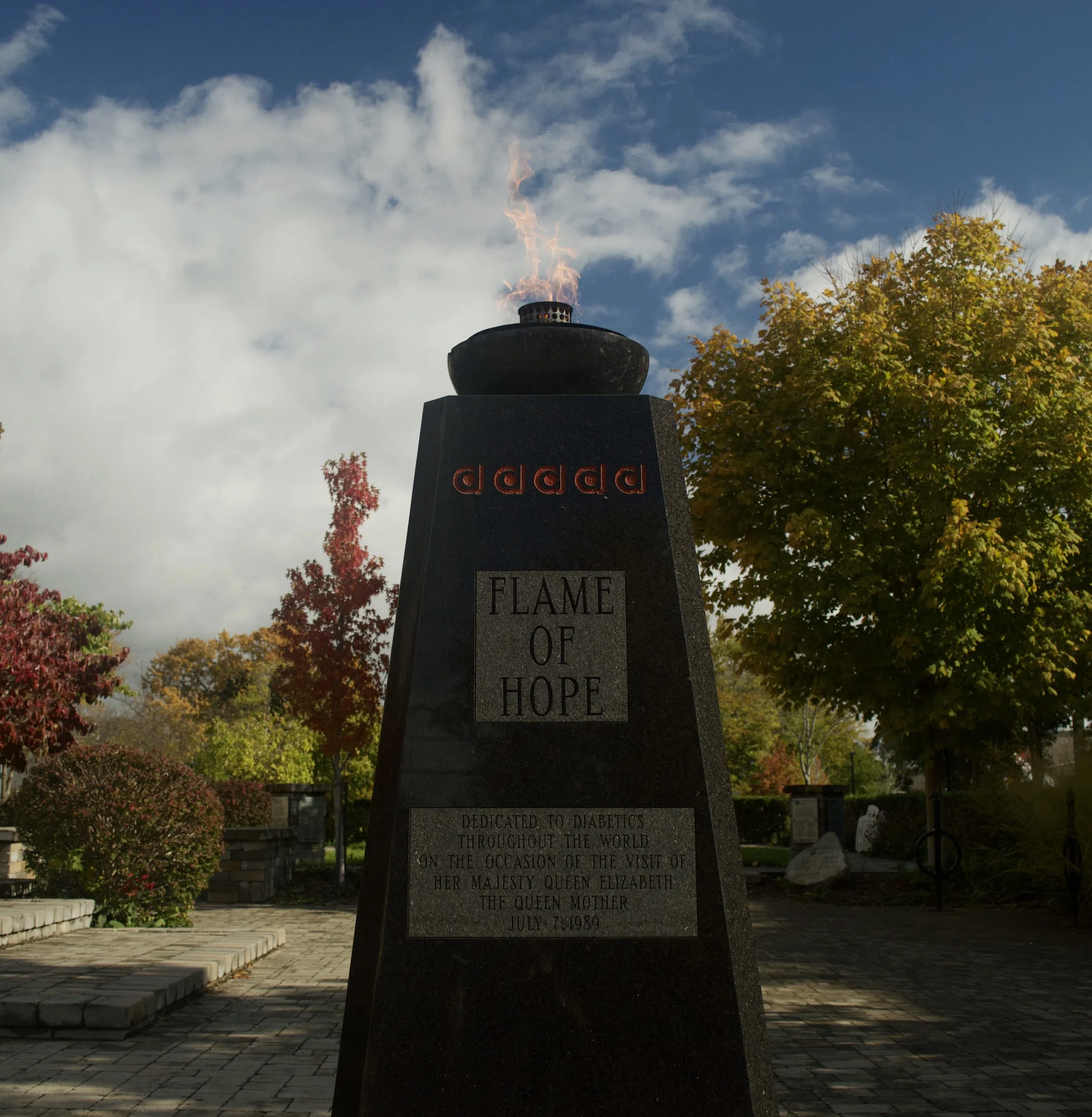
Flame of Hope, Sir Frederick G. Banting Square (Angelique Guerard/XFM News)
The Banting Museum continues to resonate with people around the world, and the eternal Flame of Hope burns bright in honour of Dr. Banting’s discovery and those affected by diabetes.
When a cure for diabetes is found, it is then that the flame will be extinguished.




Comments