


Every turning point begins the same way—with someone deciding that playing safe costs more than taking a chance. Risk is a terrifying yet often rewarding attribute of life, shaping people in ways comfort never could.
That truth often comes alive in the quieter moments in life, in times where reflection interrupts the normal morning routines or into the pauses between one obligation and the next. It’s in the in-between moments where a person realizes something has to change but hasn’t yet found that courage to take a leap of faith.
Risks show up in subtlety, pushing people towards reinvention. One woman, Jouri Hussein, said that her biggest risk took shape in an internal shift. “It was a people reset, routin reset…the most important thing was spending time with myself more,” she said, describing how an entire year became an unraveling of old habits and rebuilding who she wanted to be.

Podcast guest Karsten Rigel Talamor talked about her experience with love and risks (Lexi Saldana / XFM News)
Another individual, Michael Parisien, found his risk in movement rather than introspection, moving from New Brunswick to Ontario with no job experience or clear plan. Parisien stepped into uncertainty, discovering momentum instead. “I think I was working within four days,” he said, adding that he hasn’t been unemployed since.
For others, the leap isn’t always about geography or career, but rather vulnerability. Love and romance carry a form of unpredictability, often demanding disclosures of one’s hidden identity. A newcomer from Cebu City, Karsten Rigel Talamor, said that to know when to take a risk on someone is to know where you want to be in life. “You know it’s worth taking when it’s taking you somewhere that you want to be,” she said, explaining that opening up feels easier when the connection aligns with your direction.
“Like not just do something [for you] like per se, because like they can do something for you. You can [still] end up terribly, but like, you know, they keep your best interest in their mind.”
However, there is also risk in holding onto what’s familiar long after it’s already stopped feeling like home. Remaining where you are becomes a gamble of life, especially in relationships. “Leave, leave, leave, leave, leave, leave. Like the amount of not only relationships, but like friendships, marriages,” said Talamor. In her eyes, staying due to habit and routine is more dangeorus than walking away as she’s observed the quiet corrosion in her own personal relationships as well as in the people around her. “
“Families that have, you know, not—the falling apart into a million pieces because of like just staying, because like, you know, trying to hold on things that don’t want to be held together.” she added.
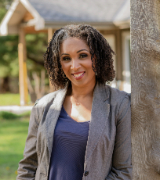
Life coach, counselor, and motivational speaker Jen Slay spoke on the podcast, sharing her thoughts on risks (Credit: edi.uwo.ca)
Life coach, counselor, motivational speaker, and author Jen Slay knows firsthand that risk is rarely glamorous. Before she became a full-time entrepreneur, she spent nearly two decades in child welfare. “And when I left [child welfare], the biggest risk I took was not getting into a job. It was deciding, you know what, I’m going to be an entrepreneur. I’m going to do this for myself,” she said, describing how real the fear was, especially as a single mother of three, leaving a job that offered benefits, security, and stability.
“The richest place in the world is the graveyard. That’s where a lot of dreams and inventions, have died because people didn’t take the risk and tried, Slay said.”
Fear of risk takes form introspectively, showing up in the body, the voice, and the choices people make when they’re on the verge of something new. Slay sees this every day in her work. “The first thing that happens is that the inner critic starts to get really loud,” she said.
“So you’re thinking, okay, this is what I’m going to do. And then that inner critic comes in and says, you sure that’s what you want to do? What if you fail? What if it doesn’t work out? What if this, what if that?”
Slay explains that that same inner voice often is the mind’s attempt to shield someone from the unknown. Though it is a protective mechanism, it can sometimes keep people rooted in place. “From those thoughts, then you start to feel, feel that fear. When you’re feeling that fear, then you make decisions based off of that,” she said.
“It all starts with the thoughts, because if you think about it with thoughts, so everything, everything starts with a thought, which leads to that feeling.”
In terms of love, Slay believes romance is both a teacher and a test, shaping people through heartbreaks the most. “People who tend to have been, quote-unquote, unlucky in love or got their heart broken or anything, (they’re scared to do it again,” she said. “And then they have a wall up. My advice when it comes to love, instead of looking at what you’ve lost, look at what you’ve gained.”
She emphasized that love demands one to stay soft in a world that sometimes rewards shutting down. To her, the real courage in romance is not avoiding heartbreak, but rather refusing to let it stop you from potential connections. “When I think back on my life, those heartbreaks all taught me something,” said Slay. “And as long as we don’t allow those heartbreaks to harden us so that we can’t open up to somebody else, then you’ve learned something.”
Risk, in all its forms, ultimately reveals who a person is becoming. Whether it shows up as an internal shift, a cross-country move, the decision to leave a relationship, or the choice to love again, each leap forces a one-on-one confrontation with fear, doubt, and uncertainty. The ingredient that unites these stories is the moment when someone realizes the discomfort of staying the same outweighs the fear of change—it’s the epiphany of how familiarity can be dangeorus itself as it can become an act of self-betrayal.
In the end, risk is not the enemy of safety, but rather the catalyst of becoming.
“To risk nothing is to risk everything.” – Geena Davis, Dying of Politeness: A Memoir (2022)



