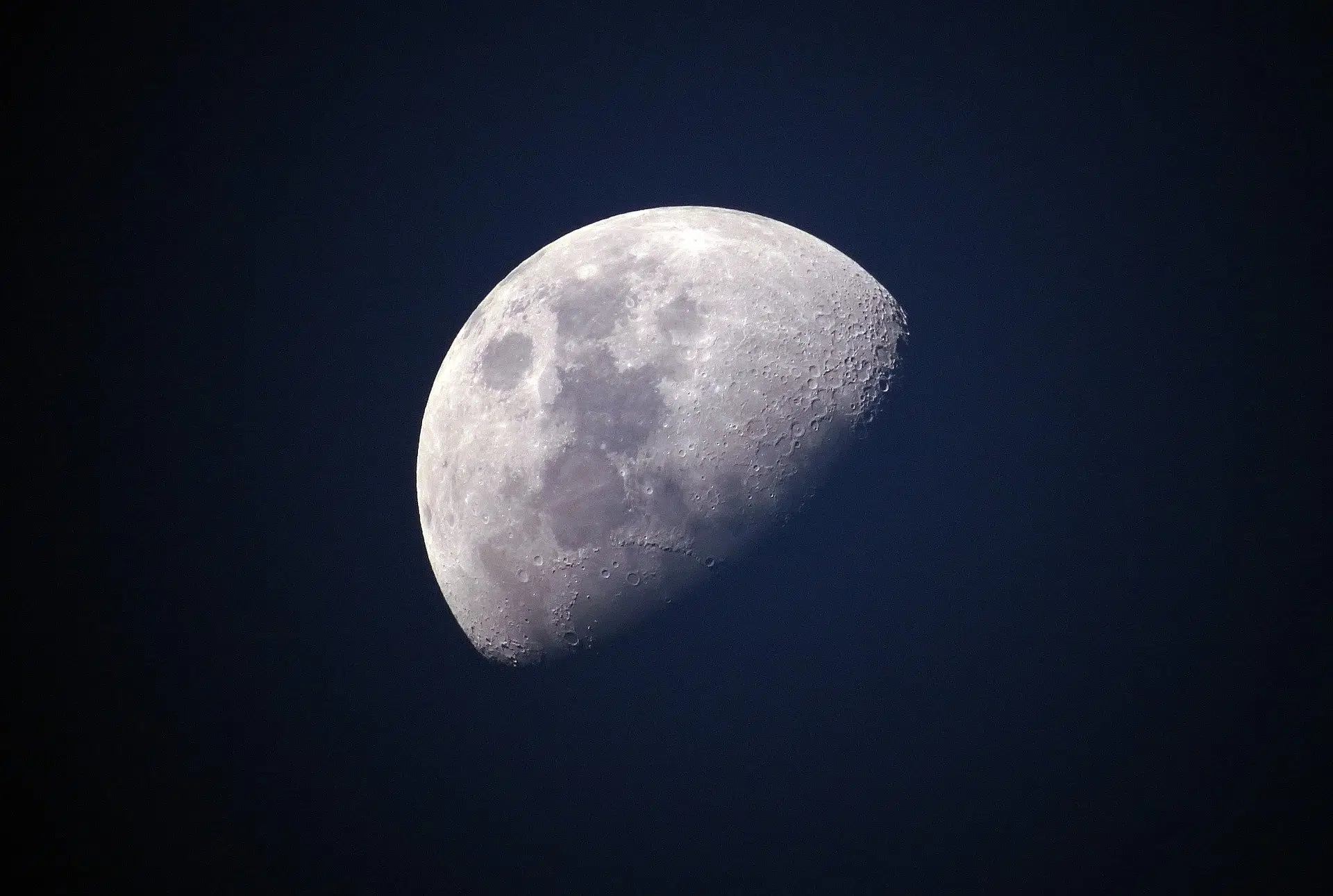
“An Exomoon is a term that we give to a moon that is orbiting another planet that is outside of our solar system.” Said Chris Fox a Physics and Astronomy PhD Candidate at Western.
“Whenever a planet passes in front of its star it causes the start to dim just a little bit,”
Fox explains that the dimming is expected to occur in a pattern and in a lot of cases, the timing is not perfect.
“Sometimes that dip in the light will occur a little early sometimes it will occur a little late. In this case, we have worked out that it could be an exomoon that is gravitationally pulling on the planet causing it to be a little bit late or a little bit early.”
In order to make this discovery the team used data from NASA’s Kepler telescope which was decommissioned in 2018. “Kepler data is publicly available to be downloaded and processed. A number of other papers have done a lot of the processing for us. In particular, the transit timing variations to tell us what those times are.”
Beyond using the data from other papers Fox has been working alongside his Ph.D. advisor Dr. Paul Wiegert.
“I’m the primary driver but I certainly couldn’t have gotten this far without (him),” said Fox. “He is the co-author of the paper and he helped with a lot of the simulations that we have done.”
The exomoons are anywhere between 200 and 3,000 light-years away. “We have six possible candidates and depending on which one you’re talking about their kind of close or they’re fairly far away. 200 light-years is still a very far way away,” said Fox.
“The best estimates right now come from a telescope called Gaia, and Gaia’s job is to measure the distances to billions of stars in our galaxy,” Fox explained that the telescope uses a method called parallax to determine distance. “You look at something from two different angles and you use a bit of trigonometry to figure out how far away it is.”
“At the moment there have been no confirmed exomoon discoveries made. There are a few candidates,” he said. “Ours are in that group. We can maybe say its a 50/50 chance at best.”
The difficult part right now is being certain about the discovery said, Fox. “These could be moons but we can also create the exact same pattern using another planet that’s out there.” “We think these are the six that we could potentially explain with an exomoon.” The six potential exomoons have been submitted for follow up research.
“We will probably have to wait for some of the newer satellites that are going to go up in the coming years such as Plato or James Webb Space Telescope to do further observations to figure out if these really are moons or not.” The JWST is set to launch in 2021 and the Plato satellite is set to launch in 2026.




Comments