Over the past 100 years there has been an incredible change in the rights and established abilities of women in North America. From gaining the right to vote to encouraging women in the workplace, our future only looks brighter from here. While changes continue to be made for the better, there are still professional work fields that are predominantly male.
One field that is still predominately male is that of first responders.
The work of first responders is irreplaceable as they save countless lives on a daily basis. The men and women of these professions face difficult situations everyday, but there are additional challenges placed on many, solely based on gender.
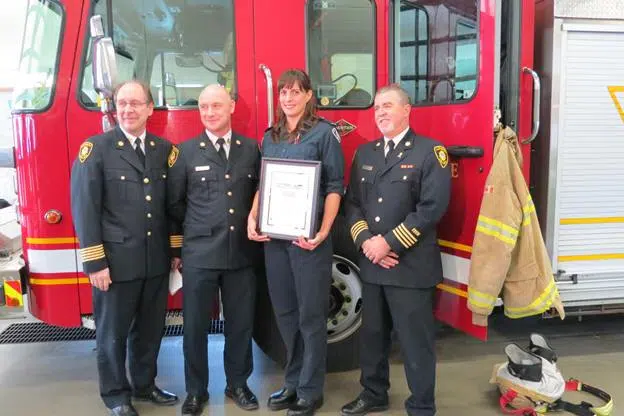
London Firefighter Allison Vickerd has been with London Fire for over 13 years. Vickerd acknowledges that she is different, as one of very few female firefighters for the city, but does not see her gender as a disadvantage on the job.
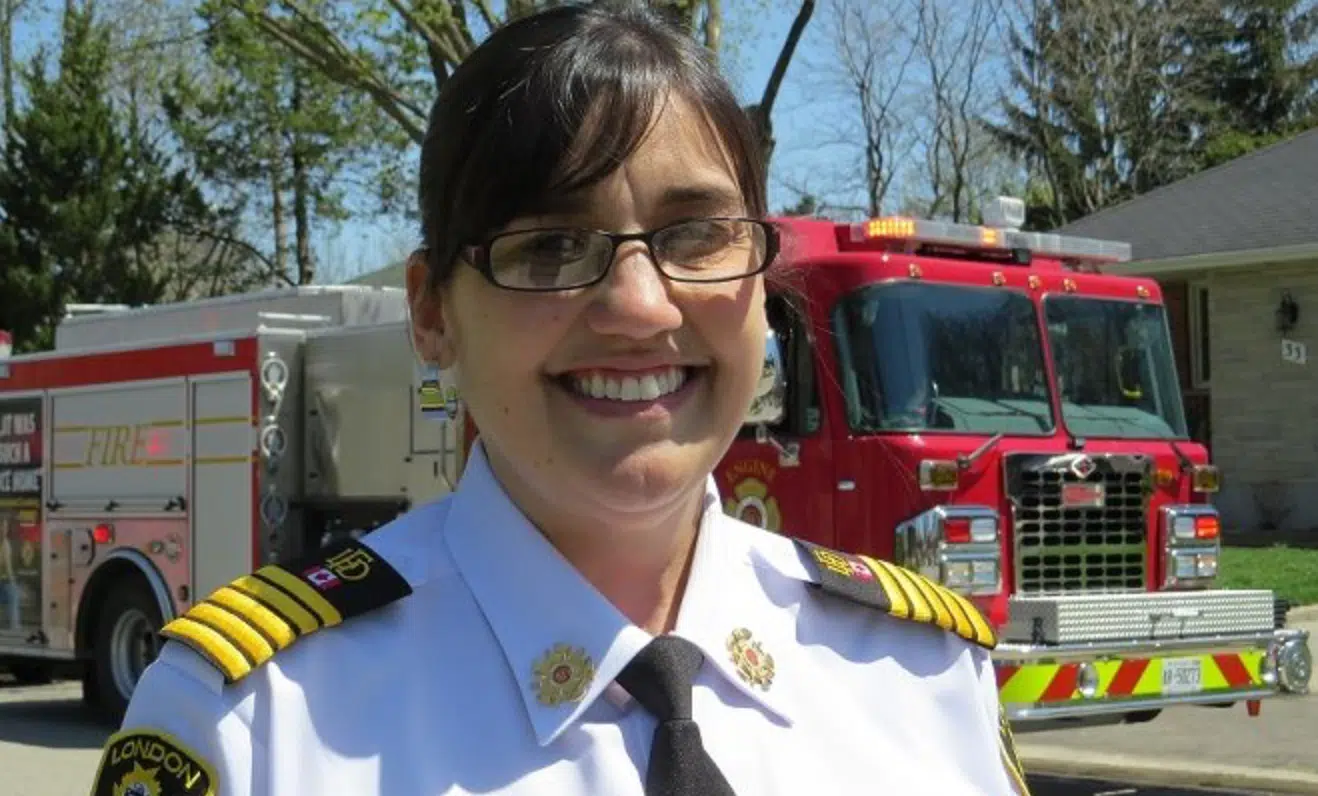
London Fire Chief Lori Hamer
Out of the 360 firefighters on the floor here in London, about 15 are female. Vickerd acknowledges that the number of female firefighters is quite low yet par with other major cities across Ontario. Vickerd believes there are signs of progress and change coming from the next generation. “So nationally our average (for women in firefighting) is 3-5%, but I will say that in fire-related programs right now, women represent 25%. That’s because of different initiatives that departments have gone through to show young women that firefighting is a career option for them,” says Vickerd.
The latest major step for women in London’s firefighting field has been the appointment of Lori Hamer as London’s first female Fire Chief. “I think a lot of people look at what our Chief has to offer both in her education and in her experience, and that goes a long way,” says Vickerd. She continues that “women that are coming up into these Chief positions have definitely earned those ranks and are competing quite hard for these positions and are finally achieving them.”
A common argument for why women aren’t as involved in careers as first responders is for physical reasons. While there are biological differences between men and women, Vickerd does not think this should hold women back from pursuing their dreams. “I knew that I was different, but everybody comes to the workplace with something to offer and women have a different perspective on things,” says Vickerd.
Vickerd acknowledges that women in male dominated fields often times hold themselves to a higher standard, constantly pushing themselves to prove their worth. She hopes that by being on location as a representation of women in Fire she can encourage female first responders as the norm.
“It used to be that as a young female we were told that you could be anything that you want, that’s kind of a lie. You can work hard to be anything you want to be.”
WATCH: Much like Firefighting, the world of politics shows a lack of female involvement. London’s Ward 9 Councillor Anna Hopkins has a message for the future women of politics.



