Pottery is one of the oldest art practices. The oldest pieces of pottery are believed to be found in China’s Hunan Provence and are about 15,400 years old. It’s safe to say it can last a lifetime.
Kristy Suckling is a nurse by trade, but a year and a half ago she took a leap of faith into the pottery world.
“I was finding that I didn’t have a lot to do to fulfill myself. And so, I was kind of getting bored. My kids are now growing, and you know, being single, I was looking for something to add to my life. So, I decided to go out and take a lesson at Pinecraft and Elmer from there, I really enjoyed it.”
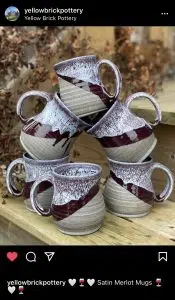
YellowBrickPottery/Instagram
Although pottery is a very giving art, the cost can add up. Kristy said after buying everything she needed to be a potter, the cost was well over $3000. On top of that, once her pieces were finished, she needed a way to fire them. Firing pottery is when you heat the clay to a very high temperature, so it reaches its optimal level of melting. The Kiln (where you fire your clay) can get anywhere between 1800°F to 2400°F. There are usually two stages to firing. The first fire, also known as the bisque firing and the glaze firing.
One thing Kristy wants people to realize, is that pottery isn’t a fast process.
“There’s about 47 different steps in pottery and it’s something that I want to make sure people are aware of, because often I get somebody asking, ‘Hey, can I get a custom mug made? I need it by this weekend?’ And I’m like, oh my gosh, it takes like three weeks to kind of go through the process and if I make it right now then I have to have a full kiln to fire it.”
Anna Nagy is a potter right here in London. She was introduced to ceramics in high school. Pottery was something that called out to her.
“So that’s kind of where it all just started going up for me. And I felt like that was the thing that made me feel complete. Creating something out of nothing. It became my therapy because I was in a quite a deep emotional state at that time trying to find myself and pottery was it for me, there’s so much that you can do, it leaves the imagination endless and that’s what it was, it was creating something out of nothing and creating beauty out of a ball of clay.”
The beautiful thing about pottery is no two pieces are exactly the same. Every piece is unique in its own way.
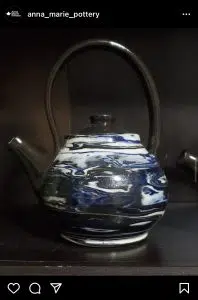
“People are so individual that if a handmade piece of work is an individual, no mass-produced piece can compare. I find that because people are so individual, something handmade got to be individual to and it’s funny, I feel like there’s this, my own thing, where every piece of pottery is made for somebody. And when you pick up that piece of pottery, it’s like, ‘oh, that’s the one’. The amount of pieces I sold and have people walk around my table, and they keep coming back to that piece, they leave and they come back. They’re like I couldn’t stop thinking about it. And well, it was calling to you. That’s why.”
Anna has overcome many obstacles in her pottery career. She some encouraging words for anyone wanting to try something new.
“If something makes you happy, don’t let struggles come in the way of continuing to do what makes you happy. I have a lot of skill barriers working against me, but I’m not letting that stop me.”
Melissa Wood is the owner of Potter by the Woods. She was introduced to ceramics early on by her mom and grandmother. After watching and listening to stories, it was something on her bucket list. She started out by taking a class at Fanshawe and from there dove headfirst.
Some of the many things she creates is mugs, bowls, incense burners, and cream and sugar bowls.
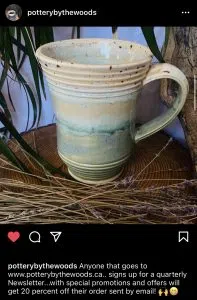
“You just take a ball of clay and you have to wedge it and you get all the air pockets out. You wedge it like you do with dough. You do that about 10 times. Then you put it on the wheel, and you have to turn it and center it so that it’s centered properly, or it will be off balance. Then you make a hole in the middle like you would a doughnut and you pull the edges close to you. So, you’re pulling it apart and then you take your fingers and you literally turn up the edges and pull them out.”
Her favorite part is seeing the finished product.
“When they come out of the kiln, you really don’t know what you’re going to get. It’s fascinating to see all the different colors together and what the finished product looks like.”
Pottery is one of many art forms. It’s both practical and beautiful. Stoneware can be passed down from generation to generation. The value can only go up in these hand crafted pieces.




Comments