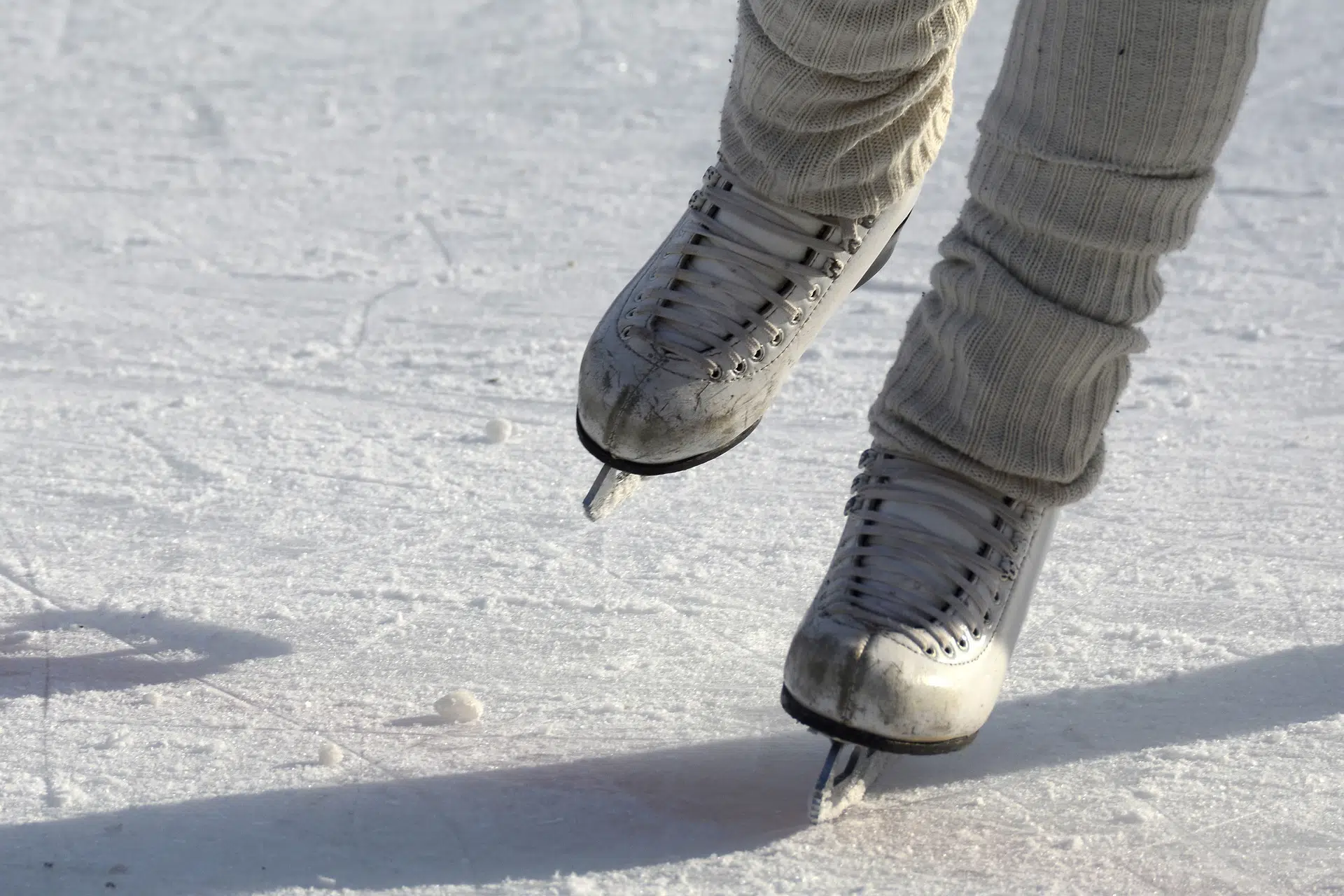
Photo via anncapictures on Pixabay
Hockey is one of the favourite pastimes of many Canadians. All the equipment in hockey, your stick, helmet, pads, it’s all important in it’s own way. But the one thing you can’t fundamentally play the game without is skates.
But a lot of Canadians don’t know how to skate, or have fallen out of it. So, how do we fix that?
Well a hockey player is probably a good start.
Carley Mulligan, a Fanshawe Student and a hockey player since she was four, explained the skating process.
“So the first step would be making sure that you’re good at balancing. Like you’re you’re comfortable standing on the ice on skates.”
Once you’re balanced, the next step will be actually moving on the ice.
“You would use your back foot and you would place it behind you and then you would turn it so that the inside of your foot is facing outwards,” which Mulligan explained was the universal starting position for not just hockey but all skating.
“Then you would push off using that foot and keeping your other foot straight, and then just alternating between feet doing the same movement.”
Moving on skates is probably the second most important part of skating. The most important, however, is stopping. It’s also the hardest.
“You’d want to keep your inside foot straight. And then you’d want to use that as like an anchor for your outside foot because your outside foot’s gonna help you turn to stop,” she said.
“So what you’re gonna want to do, is you’re gonna turn with your knees bent and kind of just push the other way with your skate.”
Stopping is, without a doubt, the most difficult thing about skating. It’s a weird thing to do, as if you don’t do it properly, you either end up falling, or just turning sharply.
Mulligan says the best advice is to be patient with yourself while you’re learning.
“It takes a lot of practice to to learn to skate. I learned when I was really young. But I definitely it was definitely a lot of trial and error, it’s just something you got to pick up on your own.”




Comments