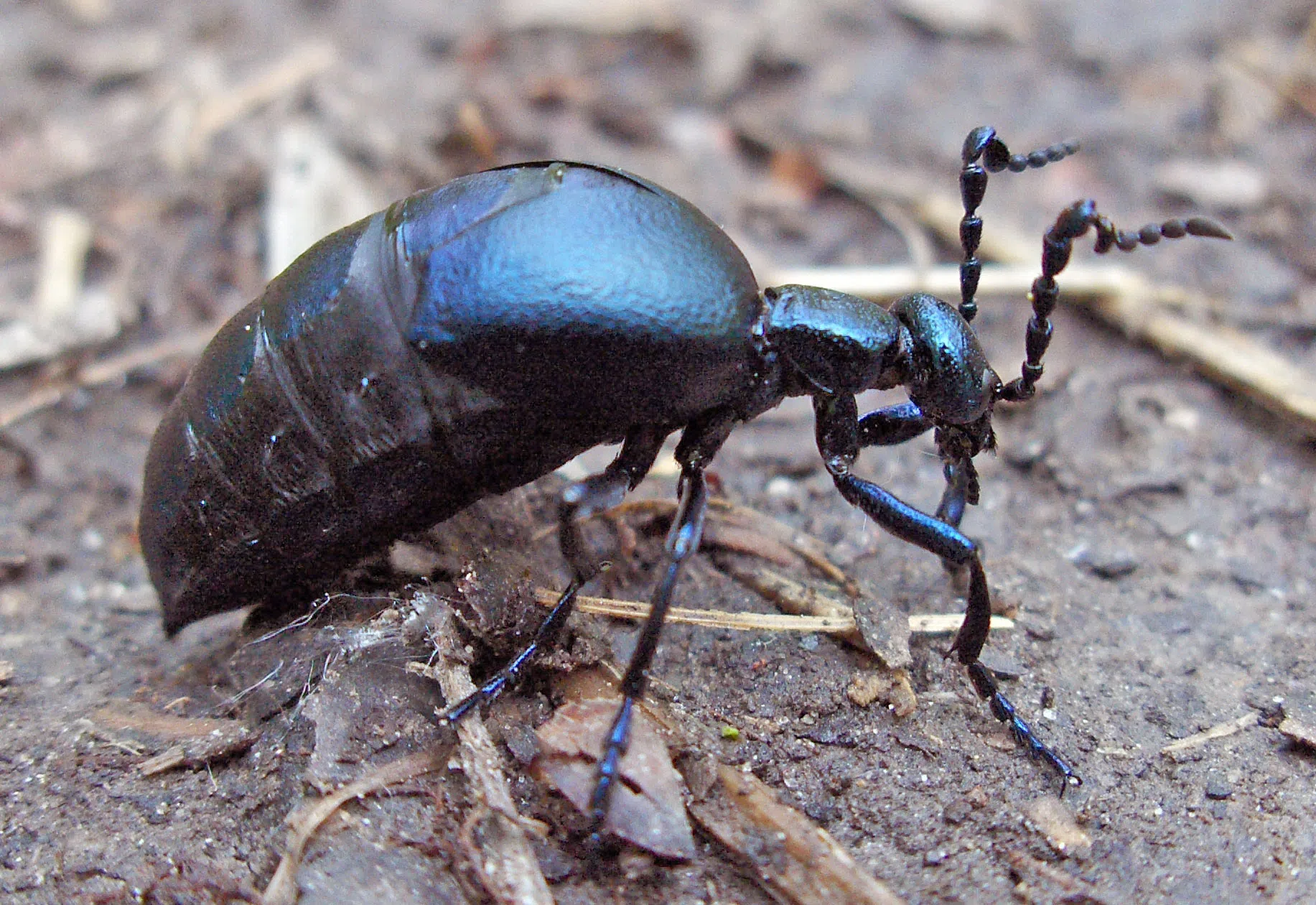
Source: Stemonitis / Wikipedia Commons
It may just look like an unassuming black bug, but blister beetles know how to defend themselves in a pinch. The City’s Instagram account posted yesterday about the toxin-releasing bug.
The post states that a few of what appear to be American Oil Beetles have been seen around Arthur Ford Park. Comments on the post also claim that the insects have been spotted throughout London, including in McCormick and Kiwanis Park. The American Oil Beetle is part of the Blister Beetle family. They’re fairly small, typically being 7mm to 30mm.
Don’t worry too much about the insects coming for you, though. They don’t fly and are slow-moving. However, they can release a chemical from their joints that you should avoid getting on your skin. An irritating orange fluid named canthardin leaks out when the insects feel threatened. Contact with skin can lead to painful blisters and swelling.
The American Oil Beetle can be found all around North America. It eats grass and other plants to sustain itself. The larvae will hitch a ride on bees. Once at their hives, they’ll hide and feast on the pollen brought back to feed the bees’ young. Sometimes they’ll even eat the bees’ eggs and larvae.
Rest assured, the rare bugs are expected to be gone by the time winter rolls in. For now, the City warns people to keep their pets away from the rare bugs. They can be toxic to animals when ingested. They request that any sightings be reported at service.london.ca.



