With our fast-paced society cycling through fashion trends each week, it is not surprising that the industry has become a whirlwind of constant reinvention.
From social media-born aesthetics to seasonal must-haves, consumers are frequently in pursuit of the next big thing. However, as the industry becomes more saturated each day, the line between originality and inspiration becomes blurred–and with that comes a growing concern about sustainability.
The industry is responsible for an estimate of 92 billion kilograms of textile waste annually. It accounts for eight to ten per cent of global carbon emissions, 20 per cent of industrial water pollution, and 35 per cent of all primary microplastics released into our oceans.
The statistics are reminders of change that needs to be implemented in the fashion world–especially with so many brands launching each day.
Jonathan Hudson, owner of local independent streetwear brand ‘V.F.O.S’, is a fashion designer navigating sustainability while building a brand in an increasingly competitive field. What started as a high school hustle has now evolved into a full-fledged label as he holds pop-ups all over the city, a website offering worldwide shipping, and a growing social media following.
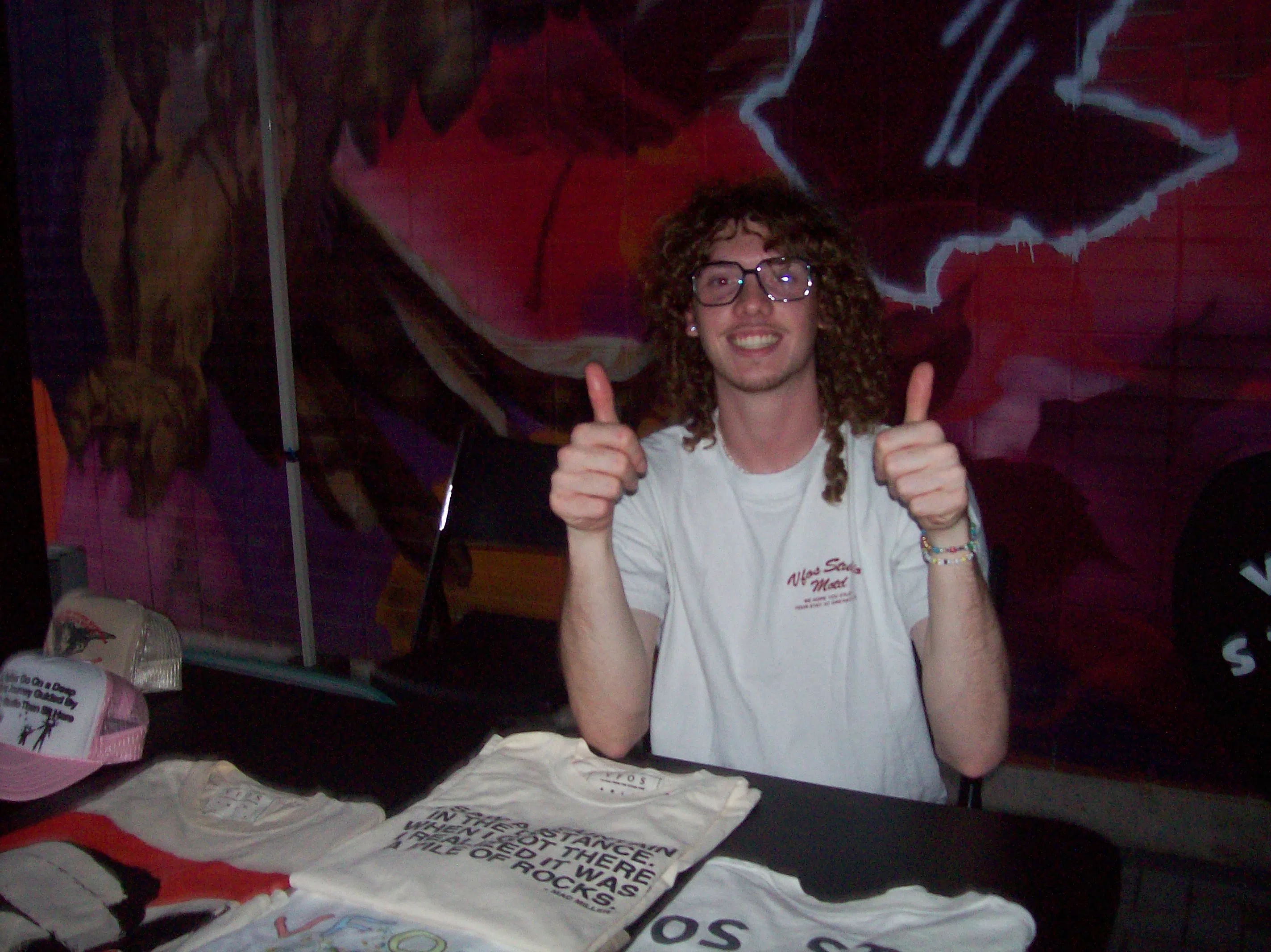
Jonathan Hudson, owner of V.F.O.S
With eight years in the industry, Hudson has developed his brand into a more eco-conscious label; balancing bold, unique, and curated styles with sustainability.
” It comes from a belief that like, everyone is unique, right? Like we’re all our own soul to begin with. And some people, you know, they go with a crowd, some people don’t. But if you can just connect with that self, the true self that you have, and just express that, then you’re always going to be original,” explained Hudson when asked about the importance of authenticity in fashion.
“Like, as long as you use yourself, your life experiences, your values, your perspective, you use that as inspiration, you’ll never run out of inspiration. Like, as long as you’re living, you don’t run out of life.” he added.
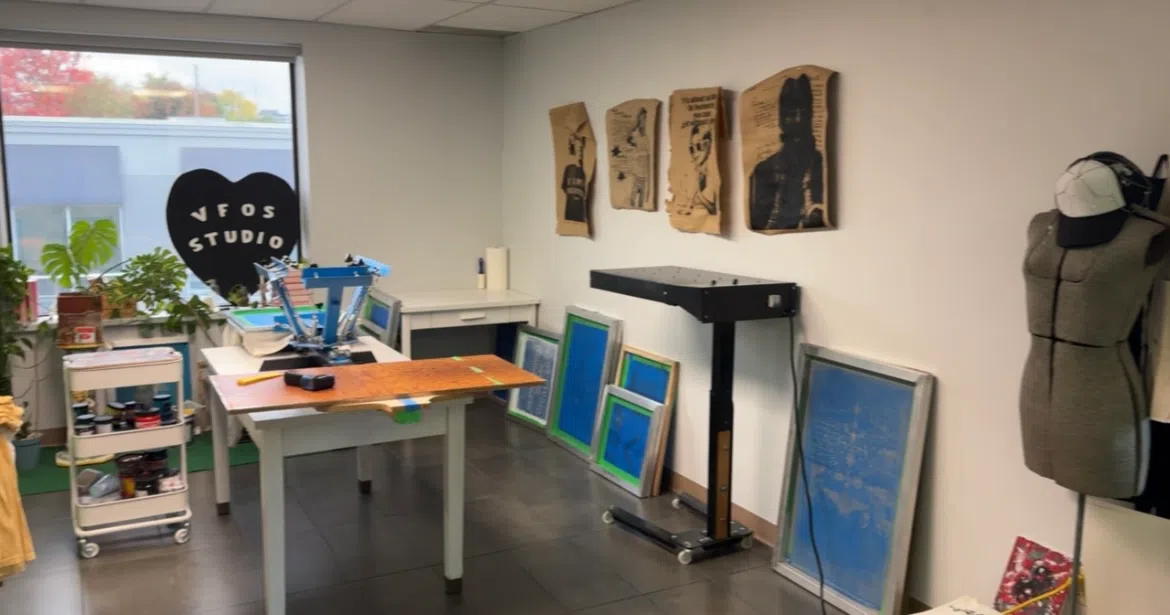
Using the process of screen-printing: a stencil-based technique that transfers ink through a mesh screen onto a fabric, Hudson’s garments are crafted with sustainability, durability, and creative impact in mind.
“And what’s nice about the water based ink is any excess I have, I just put it right back in the tub and it gets used. I’m not out here wasting ink. And if it starts to dry up, it’s water based, so you just add the water back in.” says Hudson.
Although it is impossible to be completely zero-waste in a fashion production process, Hudson emphasizes the importance of making conscious decisions whenever possible.
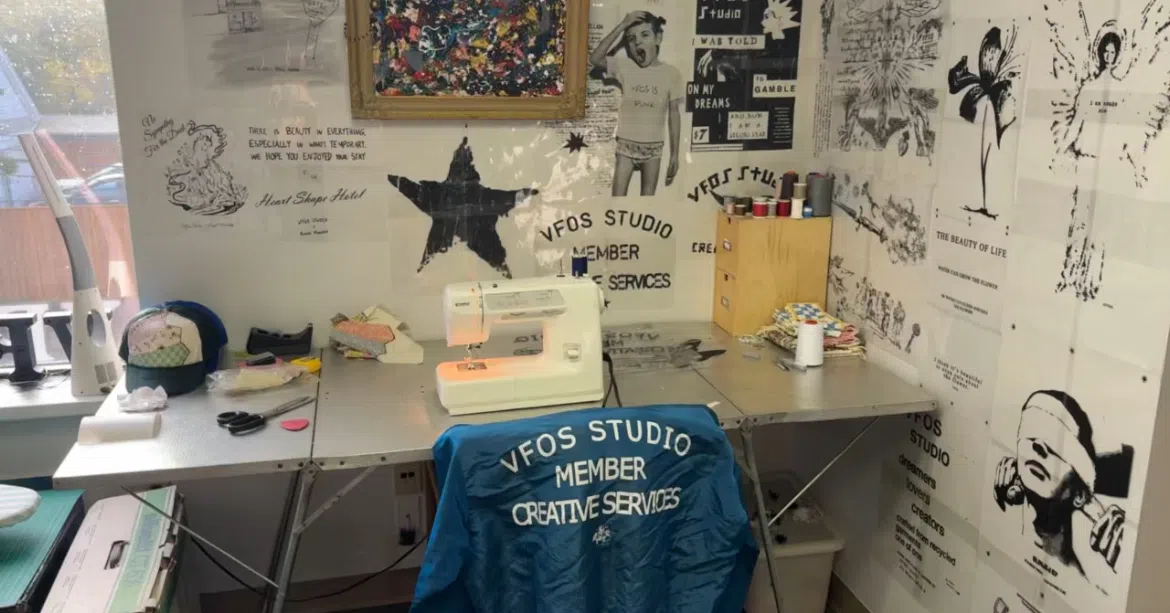
V.F.O.S studio (courtesy of Jonathan Hudson)
“Like one of the largest wastes in fashion industry is quite literally just waste, like B grade items, stuff that is flawed. I think the industry standard for screen printing is about 20 per cent flaws. And that’s just industry standard. So if you have a big company printing 100,000 shirts, like that’s 20,000 shirts that is going to the garbage or getting shipped out to a third world country or whatever,” stated Jonathan.
“And that’s like that along with water usage, stuff like that is terrible for the environment. So that was my big mission starting out when I was getting familiar with what I could do to be more a eco-friendly brand.”
Hudson mentioned that he often puts defective or faulty garments into a sale bin at a discounted price and often collects scrap fabrics and even threads to repurpose them into potential new designs or pieces.
To be more transparent in V.F.O.S’s sustainability efforts, he ensures that he adds it to a product’s label to inform customers about what the garment is made of as well as having conversations with curious consumers.
“It’s just in the product description, like in the product details and the content care, all that stuff. The one thing that I do try to make really clear is 100% cotton. Almost all the products are 100% cotton, never use 100% polyester, never will,” says Hudson.
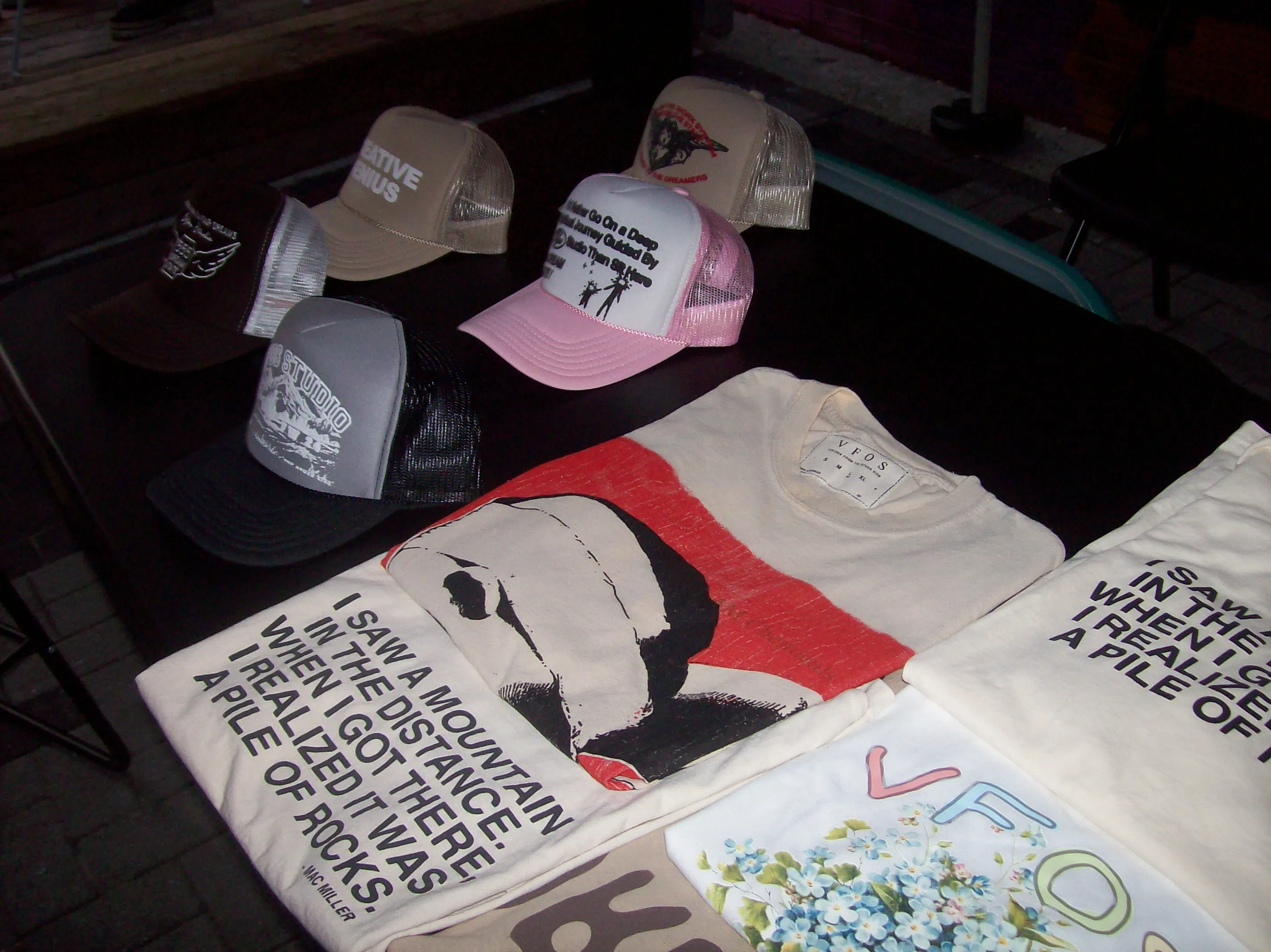
credit: Lexi Saldana
“And then when I am selling in person, I’m pretty open to talk to about that kind of stuff. If anyone’s ever inquisitive about like, you know, how things are made. I like sharing the process because it’s a very hands on process. Like, if you’ve ordered a product for me in the last eight years, I’ve guaranteed touched it. Like 100%. Every part of the process, I’m a part of pretty well.”
In an industry often driven by mass production and the constant need to fulfill the trend-driven demands of consumers. Jonathan Hudson’s efforts through V.F.O.S offers a necessary approach.
By prioritizing eco-friendly materials, staying true to his own creative process, and most importantly highlighting the importance of making conscious decisions in every step, Hudson is a designer that values integrity over immediacy and purpose over profit.
As the fashion industry continues to evolve, designers like Hudson are leading a quiet revolution because in the end, style should not come at the expense of the planet.



