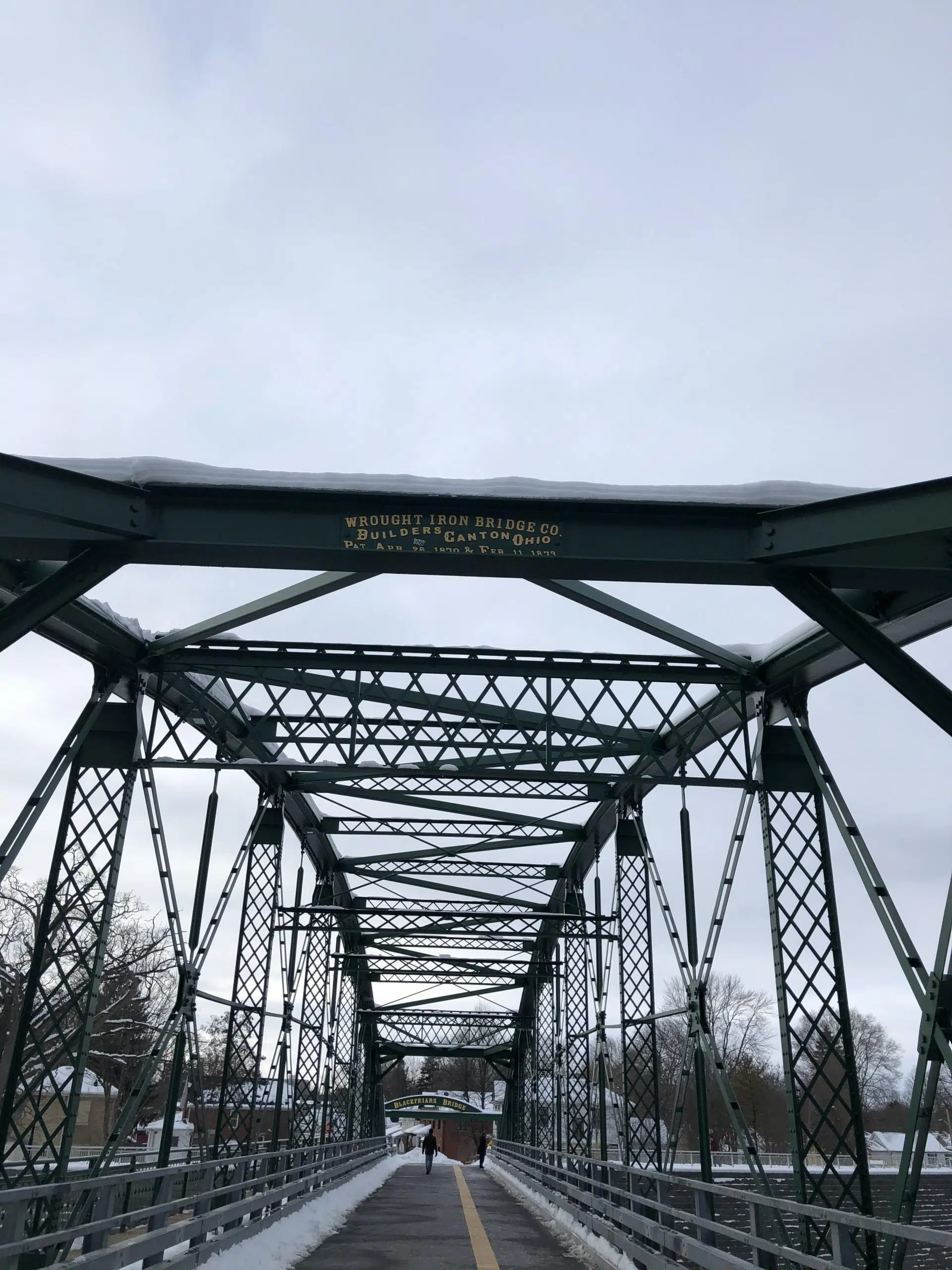
Photo taken by Victoria Newman, XFM News.
Blackfriars Bridge in London is one of the few remaining wrought iron bridges in Canada. It is an important piece in our cultural heritage and one that many want to preserve. It has been the inspiration for artists, writers, and historians.
Doug MacRae is the Director of Roads and Transportation in the City of London and he said “Blackfriars Bridge is an important link in our transportation system” but is so much more. He also highlighted how it is loved by many as it is a hidden gem within the city.
As such, when the bridge was showing signs of advanced deterioration, people knew that something had to be done. MacRae discussed the process by which the restoration of the bridge took place. Where there were meetings at city hall with input from the community, to trying to retain as much of the heritage value of the bridge.
“Right down to the extent of the connections. Back in 1875, hand rivets were a common way of connecting two pieces of metal. That technology was long since been replaced by nut and bolt. We actually engaged with a really strong project team, strong consultant, and a contractor that really took on this project with a strong love of its heritage aspect. And the contractor learned how to do hand riveting as per the techniques that they would have used in 1875,” said MacRae.
Lincoln McCardle is a Londoner who is known for his love of the bridge. When asked where his love for the bridge came from, he said his mom, Judi McCardle. He said that he remembers growing up and hearing her say how she had a love affair with the bridge.
“Honestly, my whole life my mom lived within a few blocks of the bridge and actually planned where she was going to live based on how close to the bridge it was,” he said while describing her love for the bridge.
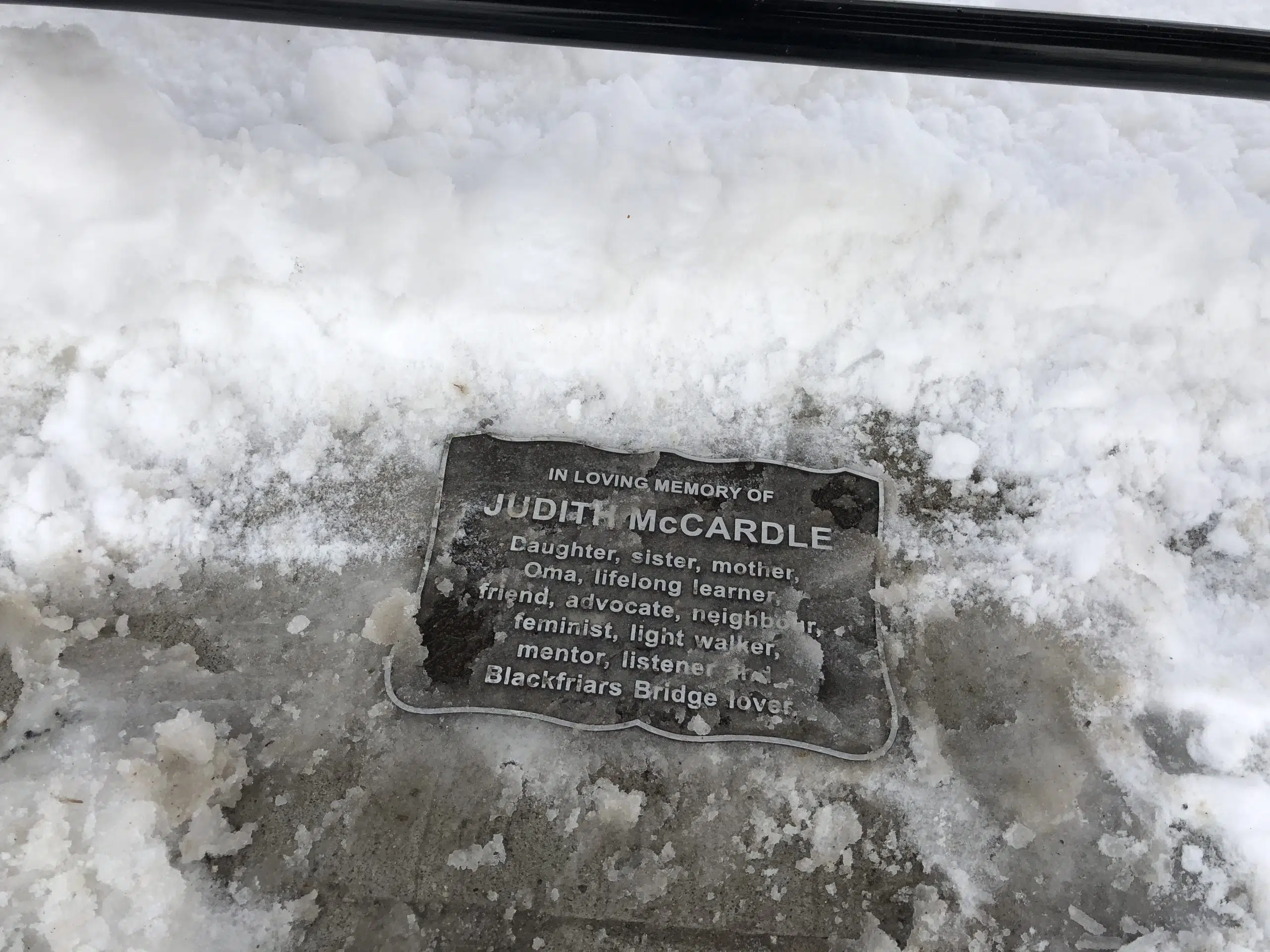
Photo taken by Victoria Newman, XFM News.
It was because of her love and dedication to the bridge that Lincoln had the small bench on the east side near the bridge dedicated her.
He remembers how just before she passed away, she went down to visit her bench and memorial plaque.
“She was actually able to go and visit her bench, and get pictures taken of her sitting on her own memorial bench. Which was kind of morbid but believe it or not it meant a lot to her. So once that happened, she said ‘you know what that’s all I need. I don’t need a memorial service or anything like that.'”
A few weeks after she passed away, Lincoln and the family met at the Blackfriars Bridge and “that’s actually where her ashes ended up was in the Thames River below the bridge,” he said.
Lincoln is currently working on a book about Blackfriars Bridge and the surrounding community. He knows that it is something his mom would have wanted. When he first started his book, his intention was for it to be a love letter to the bridge. But as he works on it and has time to reflect on his mom and the bridge, he realized that “it’s a love letter to a mom who loved a bridge.”




Comments