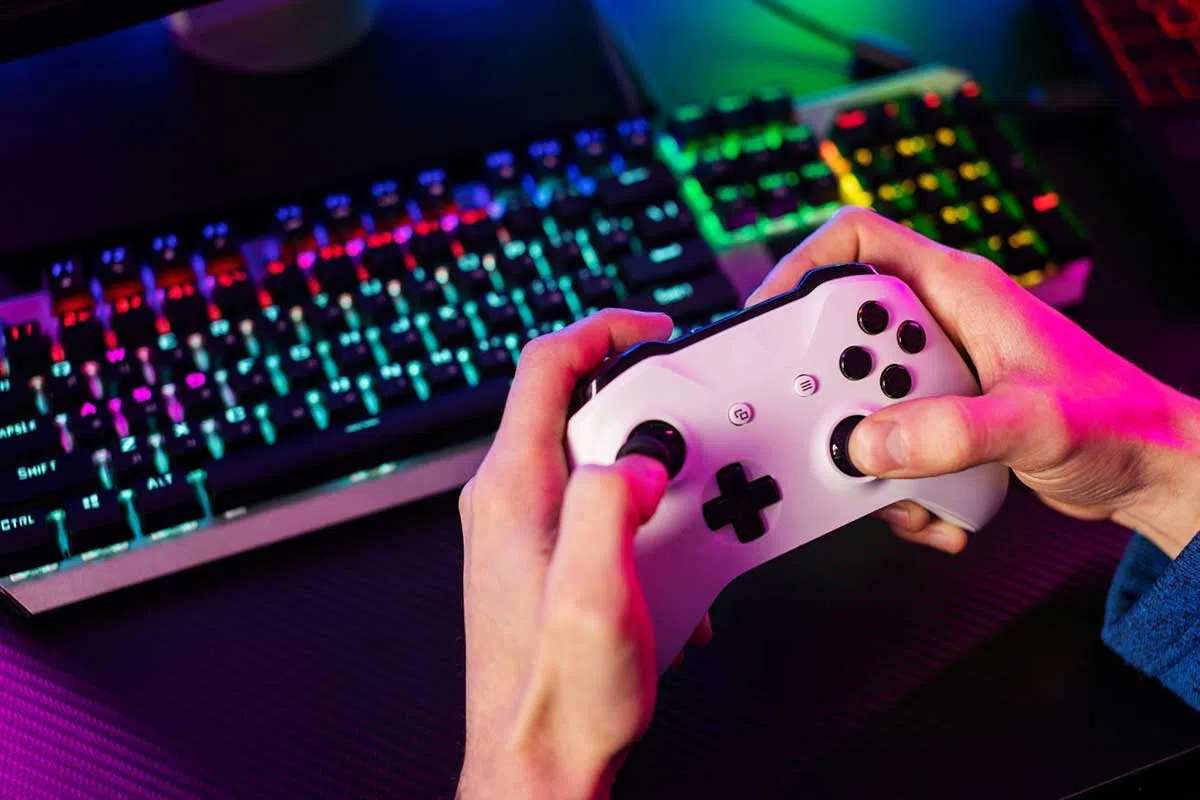
When the first video games were released, they were a common way to have fun, relax, and spend time with friends. But in the last several years, they’ve evolved into a super-competitive arena driven by ranked modes, esports tournaments and influencer culture. Competitive gaming has brought a lot of global recognition and opportunity, but it’s also raising the question of whether that fun is slowly fading away.
Logan Daigle, a current esports player and team captain at Fanshawe College, said the competitive scene has changed significantly since he started.
“When I first started esports, the competitive scene has really changed a lot,” Daigle said. “There are some teams that can drop 100 kills in six games, it’s how competitive some of those teams can be, it’s absurd.”
He said frequent game updates and new seasonal challenges continually push players to improve. But Daigle believes gaming’s focus has shifted away from creativity and community.
“Honestly, I think games today are probably more about money making and monetization than even competition or fun,” he said. “AAA games are $80 or $90, and big studios’ priorities are selling skins more than servicing the player.”
Daigle also said the rise of streaming websites and social media has increased competitiveness, with top personalities influencing how games are viewed and played.
“There are so many streamers that are involved in competitive gaming now,” he said. “They dictate the competitive scene. Developers cater to pro players rather than the community, so casual players can’t have fun.”
For some players, even casual games are tournament-level. Daigle said newer players tend to be matched with highly skilled players who take every game seriously.
“It might be an issue for people getting into gaming,” he said. “Even in the lower ranks, players can be very sweaty. They just suck the fun out of people.”
Fanshawe esports coach Bob Lenson also recognizes gaming is more competitive today, but he sees that as part of an overall positive evolution.
“I’ve been playing in online leagues since I was 14 years old,” Lenson said. “It was super limited back then. There were five, maybe, professional teams for Call of Duty, and you made $5,000 a year. You couldn’t live off it.”
He said that’s no longer the case. The development of Tier 2 and Tier 3 tournaments has made room for more casual and semi-professional players.
“There are a lot of small, casual events that are organized as well,” Lenson said. “Someone who doesn’t care as much but just wants to play with his friends can still get into a tournament. That’s good because it gets people in that wouldn’t usually.”
Lenson said his coaching philosophy is more focused on improvement and enjoyment rather than winning.
“There’s no big money in it, so if you’re having fun and getting better, that’s all that counts,” he said. “If winning is all you care about, most first-person shooters are not great for winning considering you win one out of 80 games.
Both Daigle and Lenson believe the competitiveness of video games will only rise in the future, though for different reasons. Lenson considers the availability and global competition favoring the overall development of esports, while Daigle thinks that the higher level of skill and pressure might make it more challenging for normal players.
With gaming advancing as much as it has, the issue will likely be finding a balance between competitiveness and having fun. The competitive culture has brought more order, visibility, and opportunity for gamers around the world, but has created a culture where fun is sometimes an afterthought. No matter if the future of gaming is towards aggressive competition or honors its beginnings of innovation and play, one thing is for sure: video games are only becoming harder.




